






10 woodturning tips for beginners (That’ll save your fingers)
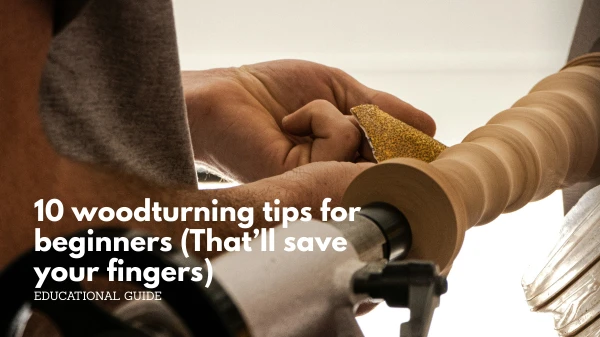
Woodturning looks deceptively simple until you’re standing at the lathe with a spinning chunk of wood and suddenly realize you have no idea what you’re doing. The lathe hums to life. The wood spins faster than you expected. Your hands grip the tool with white-knuckle intensity. Meanwhile, you’re wondering if this hobby was really such a great idea after all.
Don’t worry. Every woodturner has felt exactly this way at the start. The good news is that mastering basic woodturning tips transforms this intimidating experience into pure creative joy. With proper guidance, you’ll avoid costly mistakes and dangerous situations. Better yet, you’ll create beautiful pieces much faster than struggling alone.
This guide shares ten very important woodturning tips for beginners. These aren’t just nice-to-know suggestions. They’re the fundamental practices that separate safe, successful turners from frustrated ones. Follow these woodturning tips and tricks, and you’ll build confidence quickly. You’ll also develop good habits that serve you throughout your turning journey.
Let’s dive into the techniques that will jumpstart your woodturning success.
Table of Contents
Why Woodturning Tips for Beginners Matter
Learning woodturning without guidance is like learning to drive by just sitting in a car and hoping for the best. Sure, you might eventually figure things out. However, the path involves unnecessary risks and frustrations. Proper woodturning tips provide the roadmap you need from day one.
Safety represents the most important reason to learn correctly. Woodturning involves sharp tools and spinning wood at high speeds. Poor technique causes catches, where the tool grabs the wood violently. These moments can injure you or destroy your project instantly. Additionally, mistakes cost money. Ruined wood adds up quickly. Damaged tools require replacement or repair.
Furthermore, building good habits early makes everything easier later. Bad techniques become ingrained over time. They’re much harder to unlearn than to learn correctly initially. Finally, early success keeps you motivated. Nothing discourages beginners faster than repeated failures. These woodturning tips for beginners help you create satisfying pieces right away.
Woodturning Tip #1: Start with Sharp Tools (And Keep Them That Way)
Dull tools are dangerous tools, and in woodturning, they’re also your fastest route to frustration. Sharp tools cut cleanly with minimal pressure. Dull tools require you to push harder. This extra force increases the risk of catches and kickbacks dramatically.
Why Sharpness Matters
Sharp tools simply work better in every way. They cut smoothly through wood fibers instead of tearing them. This creates cleaner surfaces that require less sanding. Additionally, sharp tools give you better control. You can make precise cuts with confidence. The tool responds predictably to your movements.
Conversely, dull tools create rough surfaces full of tearout. They catch unpredictably on the wood. You’ll fight the tool constantly instead of guiding it smoothly. The resulting frustration makes many beginners quit before they really start.
How to Maintain Sharp Tools
You don’t need to become a sharpening guru overnight, but you do need a basic system. Invest in either a bench grinder or a sharpening jig. Many turners use both eventually. Start with whichever fits your budget and space.
Learn to recognize when your tools need sharpening. Rough cuts indicate dullness. Increased effort suggests it’s time to sharpen. Most beginners should sharpen more frequently than they think necessary. Practice your sharpening technique on inexpensive tools first. This builds confidence before you sharpen your premium gouges.
These fundamental woodturning tips about sharpness cannot be overstated. Sharp tools make everything else easier and safer.
Woodturning Tip #2: Choose the Right Wood for Learning
Not all wood is created equal, and some species are downright hostile to beginners. Choosing appropriate wood for practice makes learning much more enjoyable. It also saves you money while building your skills.
Best Woods for Beginners
Softwoods like pine and poplar work wonderfully for initial practice. They’re forgiving, affordable, and readily available. Pine cuts easily and shows your technique clearly. Poplar offers slightly better properties and still costs very little.
Once you’ve mastered basics, try moderate hardwoods. Cherry turns beautifully and finishes gorgeously. Maple provides similar benefits with slightly different characteristics. Both species cut cleanly and respond well to beginner technique.
Avoid certain woods initially. Exotic species often have unpredictable grain and high cost. Spalted wood looks beautiful but tears easily. Wood with knots creates dangerous catches. Save these challenging materials for later when your skills improve.
Where to Source Practice Wood
Save your wallet and use cutoffs, firewood, or fallen branches for early practice. Many lumber yards sell short pieces at discount prices. Woodworking shops often have scrap bins full of usable material. Tree services sometimes offer free wood from removed trees.
For practice pieces, appearance matters less than workability. Focus on wood that’s dry, straight-grained, and defect-free. These qualities make learning much easier.
Related: Before you pick up the chisel, make sure you understand the 5 Key Differences Between Hardwood and Softwood Trees and choose the right wood for the job from the start.
Woodturning Tip #3: Master the Stance and Tool Rest Position
Your body position matters almost as much as your tool technique, yet most beginners ignore this completely. Proper stance provides stability and control. It reduces fatigue during longer turning sessions. Most importantly, good positioning keeps you safe.
The Proper Stance
Stand with feet shoulder-width apart for solid balance. Keep your knees slightly relaxed rather than locked. This stance lets you move fluidly with the work. Position your elbows close to your body for better control. Avoid reaching or stretching awkwardly.
Distribute your weight evenly between both feet. This balanced position lets you shift smoothly as needed. You’ll move along the lathe bed as you work different sections. Good stance makes these movements natural and controlled.
Tool Rest Positioning
The tool rest is your best friend, so position it like you mean it.
Set the rest height slightly below the center of your workpiece. This angle provides optimal cutting geometry. Position the rest approximately one-eighth inch from the wood surface.
Adjust the rest frequently as your work diameter decreases. The gap between rest and wood should stay consistent. Always stop the lathe completely before making adjustments. Moving the rest with the lathe running risks serious injury.
These body mechanics represent crucial woodturning tips for beginners that many instructors overlook. However, they form the foundation for all good technique.
Woodturning Tip #4: Start Slow (Literally)
Cranking your lathe to maximum speed might feel exciting, but it’s also a great way to launch wood across your workshop. Speed selection depends on several factors. Understanding these factors keeps you safe and improves your results.
Understanding Lathe Speed
Larger diameter pieces require slower speeds. The outer edge travels much faster than you might realize.
Calculate the surface speed, not just RPM. A 12-inch bowl spinning at 1000 RPM creates significant force at the rim.
Start every new piece at slow speed. Increase gradually once you verify the wood is balanced and secure. Listen to your lathe. Excessive vibration indicates you’re spinning too fast for the current setup.
Speed Sweet Spots
Different operations require different speeds. During roughing operations, use 500 to 1000 RPM typically. This slower speed handles unbalanced wood safely.
For shaping and refining, increase to 1000 to 2000 RPM. The faster speed creates smoother cuts.
Finally, finishing cuts often work best at 2000 to 3000 RPM. The higher speed produces glass-smooth surfaces. However, only increase speed once your piece is balanced and round. These speed guidelines represent important woodturning tips for achieving quality results safely.
Woodturning Tip #5: Use the Bevel (This Changes Everything)
If someone had explained “riding the bevel” to me on day one, I would’ve saved hours of frustration and several near-disasters. This single concept dramatically improves your control and safety. Yet many beginners struggle for months without understanding it.
What “Riding the Bevel” Means
The bevel is the angled surface behind your tool’s cutting edge, and it should touch the wood before you start cutting. This contact provides crucial support and control. Think of the bevel as a guide that steers your tool smoothly.
When the bevel contacts the wood properly, catches become much less likely. The tool rides smoothly across the surface. You maintain consistent cutting angles automatically. Conversely, cutting without bevel support feels unstable and unpredictable.
How to Practice This Technique
Start with the bevel touching the wood and the cutting edge lifted away. The tool shouldn’t cut yet. Slowly lower the handle, which lifts the edge.
You’ll feel the exact moment when cutting begins. Maintain bevel contact throughout the entire cut.
Practice this motion repeatedly without the lathe running. Get comfortable with the feel and movement. Once you start the lathe, the muscle memory helps tremendously. This technique ranks among the most valuable woodturning tips you’ll ever learn.
Woodturning Tip #6: Cut Downhill Whenever Possible
Wood has grain direction, and fighting it is like trying to pet a cat backward. Technically possible but inadvisable. Understanding grain direction represents one of the most important woodturning tips for achieving smooth surfaces.
Understanding Grain Direction
Always cut from high points toward low points. This means cutting “downhill” with the grain. Cutting this direction slices fibers cleanly. The fibers support each other during the cut. Results look smooth and polished.
Cutting against the grain tears fibers instead of slicing them. This creates rough, fuzzy surfaces full of tearout. Visual cues help you identify grain direction. Look at the wood surface carefully. The grain pattern shows you which way to cut.
Application on Different Projects
On spindles and bowls, this means planning your approach carefully. Spindles require cutting from the center toward each end. Bowls need cuts from rim to center on the inside. Outside bowl cuts move from base toward rim.
Practice recognizing grain direction before making cuts. Stop and examine your work frequently. These observations improve your understanding quickly. Soon, reading grain becomes second nature.
Woodturning Tip #7: Make Light Cuts and Multiple Passes
Aggressive cuts might feel productive, but they’re the express lane to catches, tearout, and airborne wood chunks. Light cuts provide far better results with much less risk. This patience pays dividends in quality and safety.
Benefits of Light Cuts
Light cuts give you superior control over your tools. You can respond to changes in grain or hardness smoothly. The wood comes off in thin, controllable shavings. These shavings indicate healthy cutting action.
Additionally, light cuts create cleaner surfaces that need less sanding. They reduce tool wear significantly. Your edges stay sharp much longer. Most importantly, light cuts minimize the risk of dangerous catches.
When to Use Heavier Cuts
Once you’ve mastered control, you can gradually increase cut depth during roughing operations. Even then, “heavy” remains relative. Experienced turners still use lighter cuts than most beginners imagine. The key is control, not speed.
Remove material systematically through multiple passes. Each pass removes a consistent amount. This approach seems slower initially. However, it’s actually faster than dealing with catches and mistakes. These patient woodturning tips produce consistently better results.
Woodturning Tip #8: Learn to Read the Wood
Wood talks to you constantly while turning through sound, feel, and visual cues if you know how to listen. Developing this awareness separates competent turners from truly skilled ones. Fortunately, you can learn these skills quickly with attention.
Audible Cues
Smooth cutting produces a pleasant, consistent sound. This rhythmic noise indicates everything is working correctly. Chattering or rattling suggests problems. The tool might be dull or positioned incorrectly. Perhaps your speed is wrong for the diameter.
Changes in pitch signal variations in density or grain. Hard spots sound different from soft spots. Listen carefully while you work. Your ears provide constant feedback about cutting quality.
Visual and Tactile Feedback
Your eyes and hands provide constant information about how the cut is progressing. Watch the shavings coming off your tool. Long, thin ribbons indicate sharp tools and proper technique. Dust or short fragments suggest problems.
Feel vibration through the tool handle. Smooth cutting transmits minimal vibration. Roughness or juddering indicates issues. The surface appearance tells you everything. Shiny, smooth wood means great technique. Fuzzy or torn surfaces need adjustment.
Woodturning Tip #9: Practice Basic Projects Repeatedly
The secret to improving at woodturning isn’t making a hundred different things. Rather, it’s making the same thing a hundred times. This focused repetition builds skills faster than constantly trying new projects.
Best Practice Projects
Start with pens for learning spindle turning basics. Pens require fundamental techniques without overwhelming complexity. They’re also practical items people actually use. Bowls teach faceplate and chuck work effectively. Each bowl reinforces important skills.
Tool handles provide excellent practice opportunities. They’re practical, forgiving, and quick to complete. Bottle stoppers offer another perfect beginner project. You can finish one in a single session. Success comes quickly, building your confidence.
Why Repetition Works
Muscle memory develops through repetition, not variety. Each iteration reveals new insights about technique. Your speed and confidence increase steadily. Mistakes transform into valuable learning opportunities rather than failures.
Moreover, repetition lets you develop your own style. You’ll discover what works best for you. Take photos of early work for comparison later. Date your pieces to track progress. Note what worked and what didn’t in each project.
These practice-focused woodturning tips accelerate your skill development dramatically.
Woodturning Tip #10: Additional Resources for Continued Growth
Once you’ve mastered these ten fundamentals, these bonus woodturning tips will accelerate your journey further. Learning never stops in woodturning. The craft offers endless opportunities for growth and exploration.
Join a local woodturning club or guild in your area. These organizations provide incredible value for beginners. Experienced turners share knowledge generously. You’ll make friends who share your passion. Many clubs offer mentorship programs specifically for newcomers.
Watch online tutorials and demonstrations regularly. YouTube offers thousands of free turning videos. Professional turners share their techniques openly. Study different approaches to similar projects. You’ll discover multiple ways to achieve the same results.
Take an in-person class when possible. Nothing replaces hands-on instruction from experienced teachers. They spot and correct issues immediately. Classes also provide access to equipment you might not own yet.
Study the work of master turners for inspiration. Visit galleries and exhibitions. Notice how experts approach form and finish. Try to understand their design choices. This observation sharpens your own aesthetic sense.
Finally, keep a turning journal documenting your progress. Record successes and failures equally. Note what techniques worked for specific woods. Track tool settings and speeds. This reference becomes invaluable over time.
Essential Woodturning Tips for Safe Success
Woodturning creates flying debris at impressive speeds, making safety gear non-negotiable rather than optional. Many beginners underestimate the risks involved. However, taking proper precautions protects you without hampering your work.
Essential Safety Equipment
Wear a full face shield, not just safety glasses. Wood chips fly at eye level constantly. A face shield protects your entire face from impacts. Use a quality dust mask or respirator too. Wood dust harms your lungs over time.
Interestingly, avoid wearing gloves while turning. This seems counterintuitive but protects you better. Gloves can catch on spinning wood and pull your hand into danger. Similarly, remove all jewelry and secure loose clothing. Anything that might catch presents serious risk.
Shop Safety Practices
Beyond personal protective equipment, your workspace setup matters tremendously. Ensure adequate lighting throughout your work area. You need to see clearly at all times. Mount your lathe securely to prevent movement or vibration.
Keep your floor space clear around the lathe. You’ll move frequently during work. Tripping hazards cause accidents. Position the emergency stop where you can reach it instantly. Practice hitting it until the motion becomes automatic.
Start Your Woodturning Adventure Today
These ten woodturning tips for beginners give you the foundation to start your journey safely and successfully. Focus especially on the core principles we’ve covered. Keep your tools sharp always. Choose appropriate wood for your skill level. Master proper stance and tool positioning immediately.
Remember that mistakes are simply part of the learning process. Every turner makes them regularly. The difference is that experienced turners learn from these moments. They adjust and improve continuously. You’ll do the same with practice and patience.
Start with one simple project and apply these woodturning tips for beginners systematically. Don’t rush to tackle complex pieces immediately. Build your skills gradually through focused practice. Each project teaches valuable lessons that prepare you for the next challenge.
The joy and satisfaction of woodturning await you. There’s something magical about transforming rough wood into beautiful, functional objects. Your hands create shapes that didn’t exist before. The lathe becomes an extension of your creativity and skill.
Every expert woodturner was once exactly where you are now. They faced the same uncertainties and challenges. They persevered through early struggles. Now you’ll do the same. These woodturning tips provide your roadmap forward.
Pick up a tool. Start your lathe. Make that first cut. Your woodturning adventure begins right now.
Recommended for You
Wood planing: A beginner’s guide

Using a Wood Lathe for Beginners: 10 Easy Steps

Different Types of Wood Joinery: 7 Wood Joinery Techniques Explained

10 Tools You Need For Basic Woodworking

How to Plane Short Pieces of Wood: The Ultimate Guide for Beginners

How To Engrave Wood: Top 5 Techniques Guide For Beginners
Loved by our customers


Edge Grain Cutting Boards
FREE Shipping


Wood Cutting Boards
Walnut Wooden French Bread Slicer for Baguettes, 1 inch thick slices
FREE Shipping




FREE Shipping