






5 top differences between jigs and fixtures
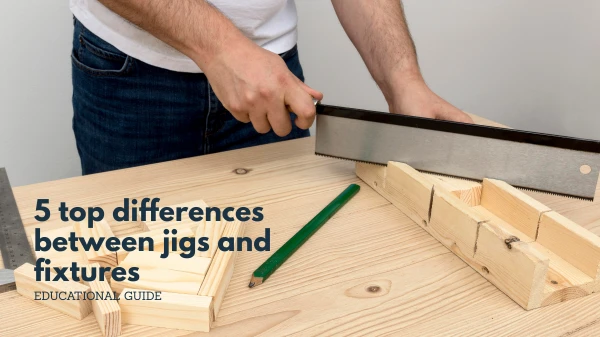
In CNC machining, various tools are used for distinct purposes and can sometimes serve other functions as well.
Some of these tools may look similar, which can confuse users and interested individuals trying to differentiate them. One such pair of tools is jigs and fixtures.
This article explains the differences between a jig and a fixture, as well as their types and uses.
Table of Contents
Jigs
Jigs are particularly used in a factory as a tool to hold workpieces so they can be properly positioned for drilling where the bushing is located in the drill jig. It is also regarded as a device used to hold the workpiece and guide the cutting tool, which increases productivity in mass-production situations.
Types of Jigs
Template Jig
A template jig is regarded as the simplest type of jig. As the name implies, it has template holes already in place where drilling is to occur. These positions serve as guides for accurately drilled holes.
Plate Jig
A plate jig is very similar to the template jig. It is an improved version that consists of drill bushes mounted on a plate for accurate drilling in specific holes. This makes it suitable for mass production as it saves time and ensures consistency.
Universal Jig
A universal jig, as the name implies, is a versatile tool used for different types of operations. It can be adapted to various manufacturing processes, unlike other jigs that have specific tasks. The universal jig has interchangeable components, which makes it versatile for different tasks, such as adjustable clamps, guide plates, and tool holders.
A Fixture
A fixture is a device mainly used to improve manufacturing efficiency and productivity in mass production. It is used to support and locate the workpiece firmly in a fixed position during an operation. Unlike a jig, it does not guide the cutting tool; it only positions and stabilizes the workpiece for the operation.
Types of Fixture
Dedicated Fixture
This type of fixture is built for the sole purpose of holding a specific part or performing a particular operation with high precision.
Standard Fixture
A standard fixture offers limited customization but is low-cost and easily available. It is designed to fit a wide range of workpieces.
Custom Fixture
This is tailored for unique or complex parts. It provides high accuracy and performance but requires a significant amount of time to produce.
Differences Between a Jig and a Fixture
Function
A jig is used to guide the cutting or machining tool, ensuring it moves precisely to the desired location on the workpiece. It often includes guiding features like bushings or templates to align the tool accurately, which reduces operator skill requirements and improves repeatability in processes such as drilling or tapping.
A fixture, on the other hand, is designed to securely hold, support, and locate the workpiece in a fixed position during machining operations. Unlike jigs, fixtures do not guide the tool but keep the workpiece stable and correctly oriented, which is especially important in milling, grinding, or turning operations.
Design
Jigs have a more complex design because they must not only hold and locate the workpiece but also guide the cutting or machining tool precisely. They often incorporate drill bushings, templates, or guideways that ensure accurate tool positioning. Since jigs interact directly with the tool, they typically require precise construction and sometimes additional accessories for tool guidance.
Fixtures, in contrast, have a simpler and more robust design focused solely on securely clamping and locating the workpiece. They do not guide the tool but provide a stable platform to resist machining forces. Fixtures tend to be heavier and sturdier to withstand vibrations and cutting loads during operations like milling or grinding and often include clamping mechanisms for firm attachment to machine tables.
Related: Learn more about different kinds of wood joinery techniques in this article
Adaptability
Jigs are generally designed for very specific tasks or particular tooling setups, which makes them less adaptable to different operations or workpieces. Because their primary function is to guide the tool, their design is tailored to the exact dimensions and cutting paths required for a single process.
Fixtures often offer greater flexibility. Many fixtures can be adjusted or reconfigured to accommodate various workpieces or machining processes. This adaptability makes fixtures suitable for different batch sizes or parts with similar geometries, offering broader usability in manufacturing.
Weight
Jigs are generally lighter in weight compared to fixtures. Their construction includes guiding elements such as drill bushings, templates, or guide rails integrated into a frame designed to assist tool movement. Because they must sometimes be portable or machine-mounted, jigs are often made from lighter materials or constructed to be as compact as possible while maintaining accuracy.
Fixtures are built to be heavier and sturdier. Their primary purpose is to hold the workpiece against the forces encountered during machining securely, so they are constructed with robust materials and solid frameworks. Fixtures often have heavy bases or clamps to prevent movement and vibration, ensuring stable positioning for operations like milling, grinding, or turning.
Cost and Complexity
Jigs tend to be more complex and costly to design and manufacture because they incorporate precise guiding mechanisms tailored to specific tools and operations. This complexity often requires higher engineering investment and precision fabrication.
Fixtures are generally simpler and less expensive to produce, focusing primarily on rigidly holding the workpiece. Their straightforward construction translates to lower initial costs, although the use of strong, durable materials may increase expenses slightly.
Conclusion
Carefully selecting and applying the right tool can significantly improve productivity and product quality. This means understanding the distinct roles and characteristics of jigs and fixtures is essential for optimizing manufacturing processes and ensuring precision and efficiency.
Related: If you are indecisive about the best oil to use for your furniture, you should read our article on the best oil for your furniture
Related Posts

DIY vs Buying Wooden Furniture: Which One is Better?

5 Key Differences Between Hardwood and Softwood Trees
Different Types of Wood Joinery: 7 Wood Joinery Techniques Explained

A Guide to Choosing the Best Wood Cutting Board
What Are The Best Oils To Use On Furniture? – 5 Top Picks
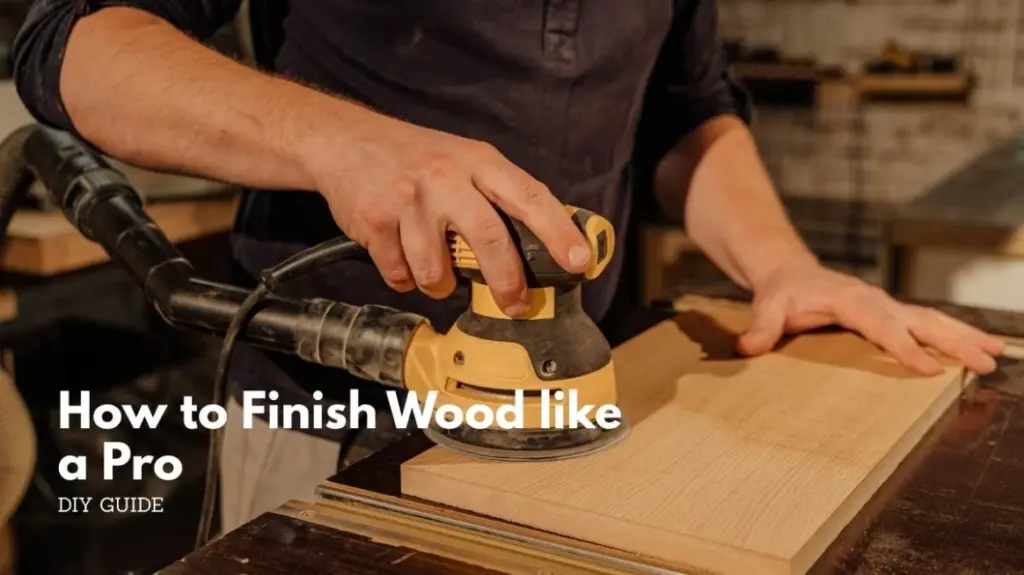
How to Finish Wood Like a Pro
Loved by our customers

Wooden Utensil Holder
FREE Shipping
Edge Grain Cutting Boards
FREE Shipping
Wood Cutting Boards
Walnut Wooden French Bread Slicer for Baguettes, 1 inch thick slices
FREE Shipping
FREE Shipping
Living Room
FREE Shipping