







10 tips for working with veneers for craft
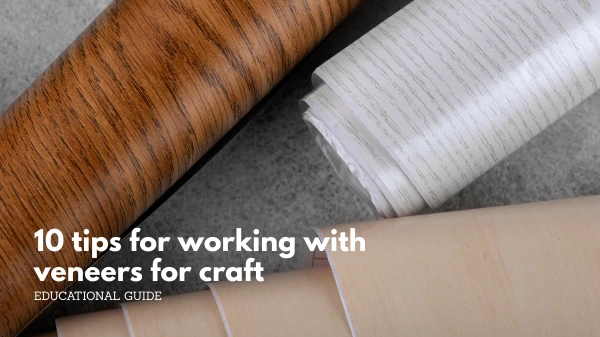
If you are familiar with the carpentry or woodworking industry, there is a high probability that you have heard the term veneer, making you wonder what it means and what role it plays in woodwork.
Veneer is a thin slice of wood used to cover the surfaces of wood products to make them elegant and natural-looking. It is usually about 3mm thick and is used to make wood appear solid without breaking the bank or adding significant weight. Veneers are commonly applied to MDF, plywood, and particle boards for stability and support. The finished results are often used for wall panels, doors, furniture, cabinets, and art pieces.
This guide highlights practical tips for working with veneers for craft, helping both beginners and professionals achieve clean and durable results.
Table of Contents
Tips for Working with Veneers for Craft
Store the Veneer Carefully
One of the most important tips for working with veneers for craft is proper storage. Veneers should be kept in a controlled environment to prevent moisture damage, warping, and dust accumulation.
They must be stored flat, and any weight placed on them should be evenly distributed. If the veneer arrives rolled due to shipment, ensure it is carefully unfolded to avoid cracking or distortion.
Surface Preparation
Among essential tips for working with veneers for craft, surface preparation stands out.
Preparing the surface properly ensures a professional finish and long-lasting adhesion. Sand the surface thoroughly to create a smooth, even base and remove grease, dust, or other contaminants.
A clean surface prevents bubbles, gaps, and peeling, which can negatively affect appearance over time.
Acclimate Your Veneer
Acclimating your veneer before use is another valuable tip for working with veneers for craft.
Veneer reacts to temperature and humidity changes, which can cause expansion or shrinkage. Allow the veneer to adjust to the workspace environment to prevent warping.
Keeping the room’s temperature and humidity stable ensures a stronger and more reliable bond.
Related: Curious on how wood veneers are manufactured? Learn how to make wood veneers right from your home.
Measure and Cut Accurately
Accurate measurement is a fundamental part of applying veneer successfully.
Use a quality measuring tape, mark clearly with a pencil, and cut using a straight edge for straight lines or a jigsaw for curves.
Practicing on scrap wood improves confidence and precision. Patience during this stage is one of the most overlooked tips for working with veneers for craft.
Picking the Right Adhesive
Choosing the right adhesive directly affects the success of veneer application.
Contact cement is suitable for paper-backed and two-ply veneers but should never be used on unbacked veneer.
Yellow glue is a common mistake and should be avoided. Cold press veneer glue remains the most recommended option in professional veneer work.
Applying Adhesive
Adhesive should be applied evenly to the substrate, not directly to the veneer. After placement, the veneer must be held firmly using clamps until fully dry.
Always follow the manufacturer’s instructions, as proper adhesive application is one of the most critical tips for working with veneers for craft.
Clamp
Clamping plays a major role in veneer bonding. Proper clamping ensures a strong and lasting bond between the veneer and substrate.
Since most adhesives require at least 24 hours of curing time, maintain a temperature between 65°F and 75°F. High humidity can negatively affect this process.
Trim Excess Veneer
Trimming excess veneer gives the project a clean, professional appearance.
Use a sharp utility knife or razor blade to remove overhangs without damaging the veneer or substrate. Sharp tools are essential for precision.
Sanding
Sanding smooths edges after trimming and prepares the surface for finishing. This step must be done with extreme care, as aggressive sanding can cut through the thin veneer layer and ruin the work.
Apply a Finish After Sanding
Applying a finish protects the veneer and enhances its appearance. Whether the goal is durability or a natural, elegant look, finishes should always be applied strictly according to the manufacturer’s instructions.
Related: Unlock the secret to great ways to finish wood like a pro – Check this out
Conclusion
Following these tips for working with veneers for craft will help you achieve a polished and durable final product. Always inspect the finished work for uneven edges, bubbles, or surface inconsistencies, and correct them promptly. Attention to detail not only improves craftsmanship but also helps build client trust through consistently high-quality results.
Related: Are you having a hard time picking the best wood glue for your project? Read our detailed guide on the best wood glue for 2026
Related Posts

Loved by our customers


Wooden Utensil Holder
FREE Shipping
Edge Grain Cutting Boards
FREE Shipping

Wood Cutting Boards
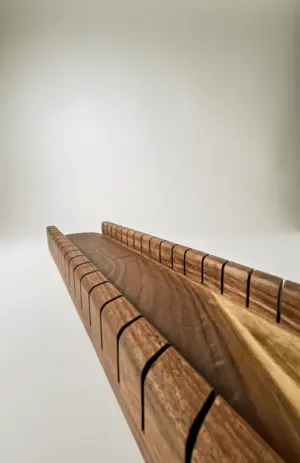
Walnut Wooden French Bread Slicer for Baguettes, 1 inch thick slices
FREE Shipping
FREE Shipping
Living Room
FREE Shipping