







Wood planing: A beginner’s guide
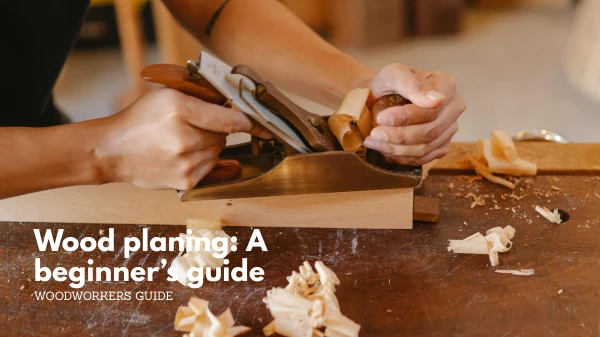
Getting wood to use for your furniture and other wood uses can be a heck when you don’t have smooth wood to make the furniture a good fit in any of your woodworking task.
The simple definition of wood planing means the removal of the surface of the wood to make way for a smooth and even finish.
This preparation is usually made as an essential part before the wood is used for assembling furniture and structures.
Table of Contents
Reasons for Wood Planning
There are many reasons for the planing of wood before it can be used for finishing reasons.
To Eliminate Irregularities
One of the major reasons for wood planing is the need to remove defects in the wood, knots, and anything that doesn’t make the surface of the wood smooth.
Aesthetical Reason
Another reason for wood planing is to make the wood pleasing to the eyes, as the grain of the wood becomes more noticeable, which makes it qualify for use.
Improving Workability
Wood planing also improves workability, as it increases the wood’s resistance to pests and fungi.
Ensures Dimensional Accuracy
Since planing the wood ensures that the surface becomes smooth and erases defects in the wood, this will make dimensions taken for work accurate.
Consideration for a Wood Planer
While working on wood planing, it is essential to consider some details in the type of planer you use for your woodwork.
Engine Power
The kind of work should determine the kind of engine you are going to be using for your work. A heavy-duty engine means that your work will be faster and easier. It also means that the engine will consume a lot of power for it to be effective and suitable.
Milling/Planing Systems
Another thing to consider for your wood planing is your milling/planing systems. There are different planing systems; there are 2-, 3-, and 4-sided planers. This consists of the spindles, planing knives, milling heads, and scoring saws that are mounted. This system calls for effective preparation of the wood for work.
Weight and Dimensions
Another consideration when picking your wood planer is to know the weight and the dimensions of the wood you will be working on. These dimensions must also be in accordance with your workspace so you can work properly.
Feed Speed
This is an important point of monitoring the speed of the device. This allows you to know how fast the device can work on your wood. Many devices range from 5 to 100 m/min.
Types of Hand Planes
Hand planers are different, but they all serve the same purpose.
Block Planes
Block planes are better for small but detailed work, which includes trimming or smoothing narrow edges of wood. It’s perfect for cleaning saw marks, fitting joints, and shaping curves.
Jack Planes
Jack planes are multipurpose, mid-sized tools used for smoothing and flattening tasks of wood. They are also used to dress rough timber, reduce thickness, straighten faces, and prepare edges for jointing, often used after a scrub plane but before jointer or smoothing planes.
Jointer Planes
Jointer planes are commonly used planes for flattening large surfaces and edges to ensure a straight, even cut. They are used as specialized tools for lengthy benches, focusing on creating straight edges and flat faces.
Related: Are you confident in yourselves, and do you want to extend it into your woodworking projects? Here is an article that gives you detailed information on the 7 best tools for DIY woodworking.
Your Shopping List
Step-by-Step Guide on How to Use a Hand Planer
Preparation Steps
The first step is to prepare the planer by sharpening the blade to ensure clean cuts when in use. This is done by testing it on scrap wood.
You can secure the workpiece firmly with clamps to prevent movement, and adjust the blade depth using the knob for shallow passes, starting at about 0.001 inches for finishing work.
Grip and Positioning
You must stand with feet shoulder-width apart for stability, using your legs to create the motion. Grip the front knob with your thumb and index finger, guiding along the side, and hold the rear handle with three fingers while extending your pinky for comfort.
Planing Technique
Push forward smoothly, applying pressure evenly on the front handle at first, then shifting to the rear as the plane advances. Plane in the direction of the rising grain to avoid tear-out, making diagonal passes initially for flattening, then straight along the grain. Lift the plane at the end of each pass and check progress frequently, reducing depth for final smoothing.
Tips for Best Results
Apply candle wax to the sole for smoother gliding. For end grain, plane from both ends toward the center or use a sacrificial block to prevent splintering. Test settings on scrap wood after adjustments to maintain flatness.
Safety and Common Mistakes in Wood Planing
Wood planing consists of many risks, such as blade injuries or flying debris. Following safety protocols minimizes hazards for beginners crafting smooth surfaces. Making safety measures a priority ensures confidence in woodworking skills.
Essential Safety Measures
Protect your eyes and face with impact-rated goggles or shields to block chips and dust during shaving operations. Make sure to wear snug-fitting gloves without loose parts, along with hearing protection and a dust mask or respirator, especially when using power tools that generate fine particles.
Workspace Preparation
The workspace for wood planing should be cleared to reduce the risk of tripping. There should be strong lighting to illuminate the wood grain patterns and blade contact. Proper checks should be made on power tools before any adjustment is made, and blades should be checked for damage or dullness to prevent unexpected binding. A good first-aid box should be kept around the workspace.
Beginner Errors
A frequent beginner’s error is planing against the wood grain. This can cause splintering and rough patches. Before planing, always test a small part of the wood, and ensure you follow the wood fibers for clean cuts. When you over-tighten the blade, it can lead to digging or stalling.
After-Work Habits
After working, vacuum dust immediately from the tool to avoid respiratory issues or slips, and store the planes in dry conditions to prevent rust. After working, review the session for improvements, such as better pressure control, to refine skills over time. These practices turn potential pitfalls into reliable techniques for flawless planed surfaces.
Conclusion
Wood planing plays a vital role in achieving quality woodworking results. By properly planing wood, you improve its appearance, workability, and dimensional accuracy, making it suitable for furniture and other woodworking projects.
Understanding the reasons for wood planing, choosing the right planer, and applying correct hand planing techniques can help beginners to work more efficiently. When combined with proper safety practices and good after-work habits, wood planing becomes easier to master over time.
With patience and consistent practice, beginners can develop confidence and produce smooth, well-finished wood surfaces suitable for both simple and advanced woodworking tasks.
Related: If you enjoy this article, you should read our ultimate guide on how to plane short pieces of wood fast to help you master the art of wood planing
This article contains affiliate links #ad
Recommended for You



Loved by our customers


Wooden Utensil Holder
FREE Shipping
Edge Grain Cutting Boards
FREE Shipping

Wood Cutting Boards
Walnut Wooden French Bread Slicer for Baguettes, 1 inch thick slices
FREE Shipping
FREE Shipping
Living Room
FREE Shipping