







What are live edge slabs and why are they popular in home designs
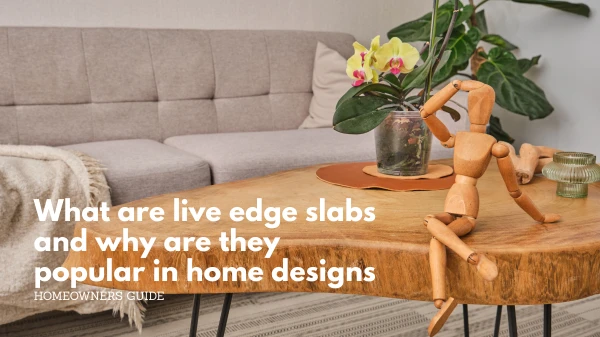
Scroll through any “dream kitchen” Pinterest board for ten seconds and you will spot one: a wide plank of timber with bark-traced edges, knots winking from the surface, and a finish smooth enough to slide a coffee cup across. That, in short, is a live edge slab, and it has quietly become one of the most requested materials in modern home design.
Live edge slabs blend the warmth of natural wood with the clean lines homeowners crave. Whether you are eyeing a dining table, a floating mantel, or a charcuterie board, understanding how slabs are made will save you money and the kind of buyer’s remorse that haunts you every time you set down a glass.
By the end, you will know what a live edge slab is, why designers love them, and how to keep your piece gorgeous for decades. Let us slice into it.
Quick takeaway: Live edge slabs are single-board sections of a tree that keep the natural curve and bark line of the original log. They bring organic texture to modern homes, work for tables, mantels, shelves, and boards, and last for generations when they are properly dried, finished, and maintained.
Table of Contents
What Live Edge Slabs Actually Are
A live edge slab is a single, full-thickness section cut from a tree trunk that keeps at least one of its natural outer edges intact. Instead of trimming the wood into a perfectly square board, the millworker preserves the wavy contour where the bark used to live. The result is a panel that still remembers the tree it came from, complete with knots, growth rings, and the occasional cathedral grain pattern that looks painted on.
Most slabs come from hardwoods like walnut, white oak, maple, cherry, and elm, though softwoods such as redwood show up in larger formats. The trees often start as urban removals or storm-felled giants. The Wood Cycle, a Wisconsin sawmill, gives these trees a second life instead of letting them become firewood.
Live edge versus regular lumber
Regular dimensional lumber gets ripped to consistent widths and squared on every side. Live edge wood skips that cleanup pass, leaving the natural curve as a feature. Here is how the two compare:
- Edges: Dimensional lumber has straight, parallel edges. Live edge keeps the natural curve.
- Width: Boards top out around 12 inches. Slabs can run 24 to 60 inches wide.
- Thickness: Boards are usually under 1.5 inches. Slabs commonly start at 2 to 3 inches.
- Character: Boards favor uniformity. Slabs celebrate knots, splits, and color streaks.
Why Live Edge Took Over Modern Home Design
Modern interiors lean clean and minimal, sometimes a little cold. Live edge slabs solve that in a single statement piece. They add organic curves where everything else is rectangular and pull warmth into rooms designed around concrete, glass, and brushed metal.
Designers also love live edge because no two slabs are identical. A walnut table from a single tree is genuinely unrepeatable, which feels rare in a world where most furniture rolls off the same factory line.
The four reasons designers keep specifying it
- Visual contrast. Soft natural curves paired with hard architectural lines feel modern without looking sterile.
- Sustainability story. Most slabs come from urban or salvage trees, so the eco angle is real, not greenwashed.
- Investment value. A well-built live edge piece appreciates more like art than like flat-pack furniture.
- Conversation factor. Every guest asks about the table. Every single one.
Slabs also let homeowners showcase species you will never find in a big-box store, like spalted maple, claro walnut, or quilted cherry. If you are weighing options, our breakdown on hardwood versus softwood trees is a good starting point.
How a Live Edge Slab Goes from Tree to Tabletop
A finished slab looks effortless, but the path from felled tree to glossy surface takes years. Understanding the steps helps you spot quality when you go shopping.
Step 1: Milling the log
Most live edge slabs get cut “through and through,” meaning the saw passes straight through the log, producing slabs that mirror each other in grain. Slabs are usually milled at 2 to 3 inches thick to allow for shrinkage and final sanding without ending up paper-thin.
Step 2: Drying the slab
Fresh slabs are loaded with water (sometimes 60 to 80 percent moisture content). They have to dry before any responsible mill will sell them. Two paths are common:
- Air drying. The classic rule is one year per inch of thickness, so a 2-inch slab needs about two years stickered in a covered shed.
- Kiln drying. A modern vacuum or RF kiln can dry the same slab in 7 to 14 days, with tighter moisture control and pest sterilization built in.
Either way, the goal is the same: get the slab down to roughly 6 to 10 percent moisture content for indoor furniture. The USDA Forest Products Laboratory Wood Handbook outlines why this matters: wood that is too wet keeps moving, cracking, and twisting after it is built into furniture. That is how dining tables turn into potato chips.
Step 3: Flattening, finishing, and (sometimes) epoxy
Once dry, the slab heads to a CNC router or large planer to flatten both faces. Cracks and voids get filled with tinted epoxy. After flattening, the maker sands from 80 up to 220 grit and applies a finish that matches the intended use.
What to Look For When Buying a Live Edge Slab
Buying a slab is half nerd checklist, half love at first sight. The checklist keeps you out of trouble; the love part is why you keep clicking marketplaces at midnight.
Moisture content (ask the seller)
Demand a moisture meter reading before you pay. Indoor furniture wants 6 to 10 percent. Lancaster Live Edge calls documented MC numbers the single best filter for separating real producers from flippers. If a seller cannot give you a number, walk away.
Thickness and intended use
- Charcuterie boards and small shelves: 1 inch finished is plenty.
- Coffee tables and side tables: 1.5 inches finished hits the sweet spot.
- Dining tables, desks, conference tables: 1.75 to 2.25 inches finished, per The Wood Cycle.
- Kitchen islands and mantels: 2.5 to 4 inches finished for a chunky, anchoring presence.
Flattening eats 1/4 to 1 inch of thickness, so order thicker than your target. Our guide to common dining table buying mistakes walks through the trade-offs.
Defects to inspect (and which ones are fine)
Every slab has personality, but personality is different from structural failure:
- Surface checks: Hairline cracks on the face are usually cosmetic and easy to fill.
- Through cracks: Splits that go all the way through the slab need bowties or epoxy reinforcement before they widen.
- Punky or rotted spots: Soft, crumbly wood signals fungal damage. Skip those slabs unless you love stabilizing resin.
- Loose bark: Bark that is already peeling will keep peeling. If you want bark on, confirm it is firmly attached.
- Cup, bow, or twist: Sight down the long edge. A flat slab that dried slowly is worth far more than a warped slab that dried in a hurry.
Pricing expectations
Slab pricing is calculated by the board foot (1 inch x 12 inches x 12 inches = 1 BF). Prices range widely:
- Common species (poplar, soft maple, ash): $5 to $10 per board foot.
- Mid-tier hardwoods (walnut, white oak, cherry): $10 to $20 per board foot.
- Premium picks (claro walnut, old-growth redwood, exotics): $30+ per board foot, per Lancaster Live Edge published rates.
A 2 by 36 by 96 inch walnut slab (about 48 board feet) costs $480 to $960 in raw lumber, before milling and finishing. A quality slab tabletop will outlive a particleboard table by 50 years, so the math eventually wins.
Project Ideas: Tables, Mantels, Shelves, and Boards
Slabs are the Swiss Army knife of statement furniture. Here are the projects that show up most often in real homes.
Dining and conference tables
The classic. A walnut or white oak slab on steel hairpin legs anchors any dining room. Aim for a finished thickness around 2 inches and a length that gives every diner 24 inches of personal space.
Floating mantels and fireplace surrounds
A 3-inch mantel mounted on hidden steel pins gives a fireplace instant warmth. Pick a species that contrasts your stone (dark walnut on white marble, light maple on slate) so the mantel reads as the focal point.
Floating shelves and console tables
Smaller off-cuts make perfect floating shelves. They cost less and let you test-drive a finish before committing to a full table. Stack two or three for a built-in look.
Charcuterie boards and serving slabs
The entry-level project. A 1-inch slab off-cut sealed with mineral oil and beeswax becomes a serving piece in an afternoon. Walnut, maple, and cherry are the workhorse species. For more, see our guide to the 8 best woods for cutting boards.
Caring for Your Live Edge Piece
Live edge slabs are tough, but they are still wood. Treat them right and they will outlive your mortgage; skip the basics and they will cup, crack, or look thirsty within a year.
Pick the right finish
Finishes fall into two camps. Penetrating oils (tung, hardwax, mineral) soak into the grain, look natural, and are easy to spot-repair. Film finishes (polyurethane, lacquer) sit on top, resist water and stains, and are harder to fix when scratched.
For dining tables and bar tops, a satin polyurethane gives bulletproof spill protection. For mantels, shelves, and decorative pieces, a hardwax oil keeps the surface buttery and refreshable. Our deep dive on polish, oil, or wax compares them head-to-head, and the broader how to finish wood like a pro walkthrough is worth bookmarking before your first coat.
Daily and weekly habits
- Wipe spills fast. Even sealed wood will swell at edges if water sits.
- Use coasters and trivets. Hot mugs and cold glasses both leave rings.
- Dust with a soft cloth. Skip ammonia cleaners and silicone-based polishes.
- Refresh oil finishes yearly. A light coat of board butter or hardwax oil keeps the grain alive.
For deeper care routines (especially on dining tables), our list of 10 tips for maintaining your wooden dining table covers the seasonal stuff most owners forget. If you prefer the oil route, the best oils to use on furniture ranks the everyday options.
Climate matters more than you think
Wood expands when humidity climbs and contracts when air dries out. Aim for indoor relative humidity between 35 and 55 percent year-round. A small humidifier in winter and a dehumidifier in summer can save a slab from cracking. Also avoid placing slabs against forced-air heat vents or in direct, all-day sun.
Bringing Home a Slab That Lasts
Live edge slabs sit at a beautiful intersection of nature and design. They bring real, traceable trees into modern interiors and give homeowners a piece that is genuinely one-of-a-kind.
To recap: choose a species that fits your room, demand documented moisture content, pick a finish based on how the piece will live, and refresh it yearly. Get those four right and your slab will look as good in 2055 as on day one.
Whether you spring for a walnut dining table or start small with a charcuterie board, you are buying a piece of a tree that almost did not make it to your home. That is a story worth setting the dinner plates on.
Frequently Asked Questions
What is the ideal thickness for a live edge slab table?
Aim for 1.75 to 2.25 inches finished thickness for dining tables, conference tables, and bar tops. Thinner slabs (1.5 inches) work for coffee tables and shelving, while thicker slabs (3 inches or more) suit fireplace mantels and chunky kitchen islands. Remember that flattening eats 1/4 to 1 inch of thickness, so order your raw slab at least 2 inches thicker than your final target. According to The Wood Cycle, well-dried slabs typically start at 2-3/8 inches thick and lose about 3/8 inch through milling and final sanding.
How long does it take to dry a live edge slab?
The classic rule is one year of air drying per inch of thickness, then optional kiln conditioning. So a 2-inch slab needs about 2 years of patient air drying, a 3-inch slab needs 3 years, and a 4-inch slab needs 3 to 4 years before it is ready for furniture use. Modern high-frequency vacuum kilns can shrink that timeline dramatically (a 2-inch slab dries in 7 to 10 days, per SW Wood Dryer industry data). For DIY buyers: if a slab is being sold as ready to use, ask for moisture meter readings under 12 percent (ideally 6 to 10 percent for indoor furniture) before paying.
Should I buy kiln-dried or air-dried live edge slabs?
Kiln-dried slabs are more stable, dimensionally consistent, and pest-free, making them the safer choice for first-time buyers. Air-dried slabs preserve richer grain colors and avoid the slight blandness that aggressive kiln cycles can cause, but they take years to reach equilibrium and carry more risk of internal checking. For most homeowners building a dining table or desk, kiln-dried walnut, oak, or maple from a reputable supplier (with documented MC readings) hits the sweet spot. Always store the slab in your home climate for 2 to 4 weeks before final flattening, regardless of how it was dried.
What is the right order for flattening and adding epoxy to a live edge slab?
Flatten first, then epoxy, then sand. The Reddit r/woodworking consensus (from working pros) is to plane the slab flat enough to seal void areas with tape or dam material, pour your epoxy with a slight overage, then plane and sand everything dead-even after cure. Pouring epoxy into an unflattened slab wastes resin and creates extra work removing flow-out. One caveat: always brush a thin sealing coat of clear epoxy on void edges first, or the heat from the deep pour will boil moisture out of the wood and bubble your fill.
How much should I expect to pay for a live edge slab?
Pricing follows species, size, and rarity. Common species in narrow widths (poplar, soft maple, ash) start around $5 per board foot. Mid-grade walnut, white oak, and cherry slabs in tabletop sizes run $10 to $20 per board foot. Premium picks like wide black walnut, claro walnut, old-growth redwood, or exotics (bubinga, padauk) can hit $30 or more per board foot, per Lancaster Live Edge published pricing. A 2-inch by 36-inch by 8-foot walnut slab works out to roughly 48 board feet, so a finished tabletop alone can cost $480 to $960 in raw lumber before milling, finishing, or base.
Recommended for You
Common Mistakes To Avoid when Buying A Dining Table

Neglect These 10 Tips And Ruin Your Wooden Table’s Charm
10 best ways to design a wood panelled room

7 Surprising Reasons To Use Wood Every Day At Home
Cherry vs Birch Wood Table: What to Know Before You Buy

Why Is Walnut The Best Wood For Kitchen Utensils?
Loved by our customers


Wooden Utensil Holder
Wood Cutting Boards
Walnut Wooden French Bread Slicer for Baguettes, 1 inch thick slices
Living Room