







Can New Furniture Make You Sick? The Hidden Dangers You Didn’t Know

There has been a recent concern about the relationship between new furniture and personal health. Studies have shown that some components used in making furniture can periodically release harmful toxins into the air, which affect health in diverse ways.
The awareness of living without toxins has become a trend, with the growing popularity of the hashtag leading a cultural shift on TikTok with over 200 million views. Toxic living can be sourced through many agents, but one way to declutter this effect is to become aware of how furniture, especially new furniture, can become harmful to your health.
Table of Contents
This article will provide information on how new furniture can make you sick, the causes and symptoms of such sickness, and how to avoid it.
Why That New-Furniture Smell Is Actually a Warning Sign
That distinctive smell when you unbox a new dresser or sofa is not the scent of fresh craftsmanship. It is a chemical cocktail of volatile organic compounds (VOCs), formaldehyde, and flame retardants slowly evaporating into your home’s air. The U.S. Environmental Protection Agency reports indoor VOC concentrations are typically 2 to 5 times higher than outdoor levels, and during and after activities like new furniture installation those levels can spike to 1,000 times the outdoor concentration.
The World Health Organization classifies formaldehyde, the most common off-gassing chemical in pressed wood furniture, as a Group 1 carcinogen. The CDC and NIOSH set safe occupational exposure limits at 0.016 parts per million as an 8-hour average. Many new furniture pieces from particleboard or MDF easily exceed that level for the first few weeks indoors. Knowing what is in your furniture, what symptoms to watch for, and how to clear the air gives you back control over your indoor environment.
What Is Off-Gassing
Off-gassing is the process in which new furniture releases volatile organic compounds (VOCs) and other chemicals into the indoor air. These materials come from toxic chemicals like adhesives, varnishes, flame retardants, synthetic fabrics, and foams that emit gases previously trapped inside the furniture.
This is mostly noticed through the unconscious “new furniture smell” during the release of these chemicals. This release can continue for weeks, months, and even years. In some cases, the release can be a permanent episode associated with the furniture. Its highest intensity occurs shortly after the furniture has been brought into a home.
Off-gassing peaks during the first 72 hours after furniture leaves its packaging and tapers down over weeks. Heat and humidity accelerate the process, so a sofa that arrives in a 90-degree summer delivery truck will release VOCs faster than the same piece in a cool room. Studies cited by the EPA show formaldehyde emissions from particleboard can continue for up to two years before falling to background levels, while solid hardwood furniture finished with low-VOC sealants stops emitting measurable VOCs within days.
Sources of Off-Gassing
While it has been established that off-gassing is the wearing off of volatile organic compounds, various chemicals used in making home products and furniture can be sources of off-gassing. This is common in materials like plywood, resin, veneers, insulation materials, and particleboard.
Furniture with VOCs often includes frames and tops like sofas, dressers, and wood products. It is also noticeable in finishes, as melamine—a high ingredient in formaldehyde—is used to make such finishes.
The biggest formaldehyde culprits are urea-formaldehyde (UF) resins used in particleboard, MDF, and most flat-pack ready-to-assemble furniture. Phenol-formaldehyde (PF) resins used in exterior-grade plywood release far less because the chemical bond is more stable. Beyond the wood substrate, polyurethane foam in upholstered pieces releases isocyanates, brominated flame retardants used in some sofas (especially pre-2014 models) shed PBDEs into household dust, and stain-resistant fabric treatments may contain PFAS chemicals that the EPA has flagged as persistent environmental contaminants.
Health Risks and Symptoms
The compounds released include formaldehyde and other potentially harmful chemicals, which degrade indoor air quality and cause health risks. These include irritation of the eyes, nose, and throat, and headaches, which are the most common symptoms.
When in contact with formaldehyde for a long period, the effects become more serious. Respiratory issues, allergic reactions, and other serious health challenges may develop. Children and older people are more prone to these serious attacks.
Short-term exposure typically shows up as eye watering, nasal stuffiness, throat irritation, headaches, and a metallic taste in the mouth. The American Lung Association notes that people with asthma or chemical sensitivities can experience full asthma attacks from formaldehyde levels well below what most people notice as smell. Long-term exposure to high VOC levels has been linked in peer-reviewed studies to nasopharyngeal cancer, leukemia, and chronic respiratory issues. Children breathe more air per pound of body weight than adults and spend more time on the floor where heavier VOCs settle, which is why pediatricians often recommend airing out new nursery furniture for two weeks before bringing a baby home.
How to Identify If Your Furniture Is Causing Health Problems
Since it has been established that new furniture often releases volatile organic compounds (VOCs) and formaldehyde through off-gassing, it’s essential to learn how to identify if your furniture is causing health problems for you.
One potent sign is physical reactions. Symptoms like headaches, dizziness, nausea, or eye irritation may become constant after bringing the furniture home. When prolonged, they may graduate into allergies, asthma flare-ups, and skin rashes.
A reliable test is the symptom-and-location pattern. If you feel fine outdoors and at work but consistently develop headaches, congestion, or fatigue within 30 minutes of being in the room with the new furniture, the furniture is the most likely cause. Track symptoms in a notes app for two weeks; a clear pattern usually emerges. For hard data, home VOC and formaldehyde meters from brands like Temtop or Awair start around $150 and give real-time parts-per-billion readings. Levels above 0.1 ppm formaldehyde indoors warrant immediate ventilation and likely return of the offending piece.
Ways to Avoid Furniture Making You Sick
Since furniture is an essential aspect of the home, you cannot avoid furnishing your space, and some pieces might come with toxic chemicals. However, there are different ways to avoid off-gassing in your furniture.
Air Out
One common solution is to ensure the furniture is exposed to enough air so that the toxic chemicals can be cleared out. You can do this by unwrapping the furniture outside the home and allowing it to spend some time outside if possible.
If this is not possible, ensure that the furniture stays in a place with good ventilation. Doing this will lessen the effect of off-gassing in your home.
Avoid Particleboard
Another essential way to avoid furniture that makes you sick is to stay away from particleboard. Particleboard is highly known for releasing formaldehyde through off-gassing. Not only particleboard, but also MDF (medium-density fibreboard), pressed wood, and engineered wood will off-gas.
This is because a lot of adhesive is used in binding them, and they contain high levels of formaldehyde. When buying furniture, look for labels like “certified particleboard products”, which are safer than the rest.
Choose Safe Furniture
One way to avoid furniture making you sick is to be very picky about the kind of furniture you bring into your home. Choose furniture made from safe, low-VOC materials and finishes.
Use wood from certified forests, natural latex foams, hypoallergenic fabrics, and water-based or low-VOC adhesives. This will reduce the flow of chemicals indoors.
The strongest defense is choosing furniture that never off-gasses heavily in the first place. Solid hardwoods like maple, oak, walnut, and cherry contain no synthetic adhesives in the wood itself. Look for furniture certified by GREENGUARD Gold, which limits VOC emissions to levels safe for schools and healthcare facilities, or by FSC for sustainable solid-wood sourcing. The CARB Phase 2 label on California-compliant pressed wood means formaldehyde emissions meet the strictest North American standard. When choosing solid wood is not in budget, the second-best move is buying floor models or open-box returns; those pieces have already done most of their off-gassing in the warehouse.
Conclusion
As much as furniture is meant to make the home beautiful and appealing to the aesthetics of the environment, without much awareness, it can become harmful to the health of those around it through off-gassing. This implies that effective measures should be taken to lessen the effect on your health, such as avoiding furniture with high VOCs and formaldehyde.
When unavoidable, you must take necessary steps to reduce off-gassing so it doesn’t negatively affect your health.
Related: If your new furniture is causing a reaction, it could be more than coincidence. Find out the Signs, Symptoms, and Proven Prevention of Wood Allergy and rule out the root cause.
An Action Plan for Bringing New Furniture Home Safely
You can dramatically cut your exposure with a simple three-week protocol. Week one: unbox the furniture in a garage or covered porch, not inside the house. If the piece is too heavy to move, set it up immediately in a room you can keep closed off, open every window in that room, and run a box fan in the window blowing air outward. Week two: keep the room ventilated for 8 to 12 hours daily and add an activated carbon air purifier (carbon, not just HEPA, since HEPA does not capture gas-phase VOCs).
Week three: do a smell test in the morning before opening windows. If the room still smells chemical at all, extend ventilation another week. The vast majority of off-gassing happens in the first three weeks, but particleboard pieces can take longer. Houseplants like Boston fern, peace lily, and English ivy were shown in NASA’s 1989 Clean Air Study to absorb formaldehyde, though the effect is modest compared to ventilation. Combine all three approaches: ventilation, carbon filtration, and a few plants, and your new furniture becomes safe living-room furniture rather than a low-grade health hazard.
Frequently Asked Questions
How long does new furniture off-gas?
Most VOCs evaporate within the first three weeks. Particleboard and MDF pieces can continue releasing formaldehyde at low levels for up to two years before reaching background concentrations. Solid hardwood furniture with low-VOC finishes typically stops emitting measurable VOCs within a few days of unboxing.
Is the smell from new furniture actually dangerous?
It can be, especially in the first 72 hours and especially for children, the elderly, pregnant women, and anyone with asthma or chemical sensitivities. The EPA reports indoor VOC levels can spike to 1,000 times outdoor concentrations during new furniture off-gassing. Short-term symptoms like headaches and irritation are common; long-term exposure has been linked in studies to respiratory issues and certain cancers.
What kind of furniture is safest from a health standpoint?
Solid hardwood (maple, oak, walnut, cherry) finished with low-VOC water-based sealants is the gold standard. Look for GREENGUARD Gold certification, FSC-certified sourcing, or CARB Phase 2 compliance on any pressed-wood pieces. Buying floor models or gently used vintage furniture is also effective, since most off-gassing has already happened.
Will an air purifier remove furniture off-gassing?
Only if the purifier uses activated carbon. Standard HEPA filters capture particles but pass through gas-phase VOCs unchanged. Look for purifiers with at least 5 to 10 pounds of activated carbon. Pair the purifier with open-window ventilation for the fastest results; the purifier alone is not enough.
How can I tell if my furniture is making me sick?
Track symptoms for two weeks. If you experience consistent headaches, congestion, eye irritation, or fatigue within 30 minutes of being near the new furniture, and feel better when away, the furniture is the most likely cause. A home VOC and formaldehyde meter ($150 to $300) provides hard numbers; readings above 0.1 ppm formaldehyde indoors warrant immediate ventilation or return of the piece.
Loved by our customers


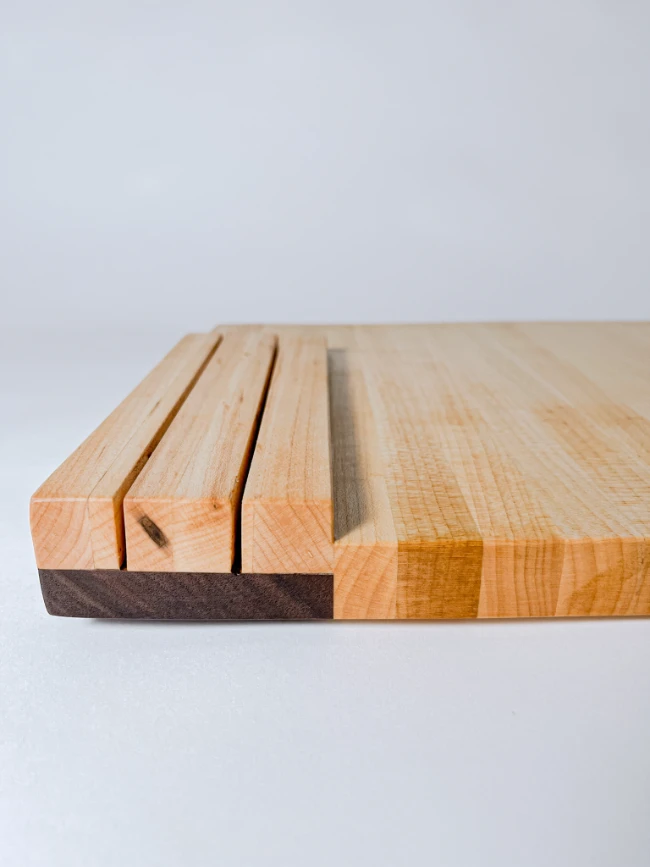
Wooden Utensil Holder
You Save: $10.00 (13%)
Original price was: $80.00.$70.00Current price is: $70.00. excl. tax


You Save: $15.00 – $30.00
Price range: $145.00 through $265.00 excl. tax

Wood Cutting Boards
Walnut Wooden French Bread Slicer for Baguettes, 1 inch thick slices





Living Room
You Save: $15.00 (20%)
Original price was: $75.00.$60.00Current price is: $60.00. excl. tax