







Can I Sterilize Wooden Utensils in the Oven?

It is a fair question. You just used your wooden spoon to stir raw chicken, your cutting board touched fish, or you pulled a utensil out of a drawer that has been sitting unused for months. The oven is right there. Can you just pop the wooden spoon in and call it sterile?
The short answer is: sort of. The longer answer involves cracked spoons, fire risks at the wrong temperature, and three safer methods that work just as well without the drama.
Here is everything you need to know before you sterilize wooden utensils in the oven, what the oven can and cannot do, and how to keep your wooden kitchen tools clean and safe for years.
Bottom line up front: The oven can kill surface bacteria on wooden utensils at low temperatures (around 160°C / 325°F for 15-20 minutes), but it risks cracking, drying, and warping the wood. Boiling for 2-5 minutes, a white vinegar wipe, or a hydrogen peroxide spray are safer and equally effective for routine sanitation.
Table of Contents
The Short Answer: Technically Yes, But Probably Not Worth It
Wood ignites at several hundred degrees Celsius, so a moderate oven temperature is not going to set your spoons on fire. The actual sterilization threshold for killing common bacteria are 121°C (250°F) and 132°C (270°F) maintained for a minimal time according to the U.S. Center for Disease Control and Prevention, which most ovens exceed easily.
The problem is not fire. It is moisture. When you heat wood rapidly in a dry oven, moisture escapes unevenly through the surface. This creates internal stress that causes checking (small cracks), splitting along the grain, and warping. A wooden spoon that went in straight may come out banana-shaped.
One key guideline from artisan woodworkers: if you do use the oven, always start with a cold oven and let the wood heat gradually with it. Never place a room-temperature utensil into a preheated oven. The thermal shock alone is enough to cause splits.
Oven sterilization rules if you must use it: Cold oven start only. Max 160-170°C (325°F). 15-20 minutes maximum. Oil the utensil with food-grade mineral oil immediately after it cools. Do not repeat this more than once or twice with any single utensil.
Why People Want to Sterilize Wooden Utensils in the Oven
The worry makes sense. Wood is porous, and porous materials seem like they should be better bacteria hotels than smooth plastic or stainless steel. Social media has amplified this fear with videos of boiled wooden spoons releasing what looks like brown liquid (it is tannins and minerals from the wood, not bacteria).
The science is actually more reassuring than the fear. Research published in food safety journals has found that wood has natural antimicrobial properties. Bacteria drawn into the wood grain die off rather than multiply, in contrast to plastic boards where bacteria survive indefinitely in micro-crevices.
That said, proper cleaning still matters, especially after contact with raw meat, poultry, or fish. For a deeper look at how wooden kitchen tools compare to alternatives, see our post on wooden vs. plastic cutting boards.
The Risks of Using the Oven on Wooden Utensils
Beyond the cracking risk, there are a few other issues worth knowing:
- Glued utensils can fail. Many wooden spoons and spatulas use waterproof wood glue at joint points. High oven heat can soften or break down these adhesives.
- Dry heat does not penetrate deeply. The oven sterilizes the surface, but bacteria inside deep grain crevices may survive unless the internal temperature climbs high enough, which takes much longer and more heat than most people apply.
- Repeated oven exposure dries the wood out permanently. A utensil that has been oven-treated multiple times loses its natural moisture content and becomes brittle. It will crack under normal use.
- You still need to re-oil. The oven strips the protective oil layer from the surface. Skipping this step after oven treatment accelerates deterioration.
Safe Alternatives That Actually Work
1. Boiling Water (2-5 Minutes)
Submerging wooden utensils in boiling water for 2-5 minutes kills the vast majority of surface pathogens. This is recommended by some artisan utensil makers for a one-off deep clean. Dry immediately and thoroughly afterward, then apply a light coat of food-grade mineral oil once fully dry.
The caveat: do not make this a weekly habit. Repeated boiling will raise the grain, soften the wood fibers, and eventually cause cracking. Think of it as a quarterly deep clean, not a daily routine.
2. White Vinegar Wipe
White vinegar is a mild acid that kills bacteria and neutralizes odors on contact. Wipe the surface with undiluted white vinegar, let it sit 3-5 minutes, then rinse with cold water and dry immediately. This is effective for routine sanitation after fish, garlic, or raw meat contact without any heat involved.
3. Hydrogen Peroxide Spray
A 3% food-grade hydrogen peroxide solution spritzed on the surface and left for a few minutes is highly effective. It oxidizes and destroys odor compounds and kills surface bacteria. Rinse with cold water, dry immediately. Use sparingly since repeated application can lighten darker wood species over time.
4. Salt and Lemon Scrub
For both sanitizing and deodorizing: sprinkle coarse salt on the utensil, cut a lemon in half, and use the cut side to scrub the surface. The salt is abrasive and draws moisture out of the wood grain. The citric acid in the lemon neutralizes bacteria and odors. Rinse and dry.
Everyday routine: Warm (not hot) soapy water after every use, rinse cold, dry immediately standing upright. Reserve boiling, vinegar, or hydrogen peroxide for after raw meat or fish contact. Re-oil every few months or when the wood looks pale and dry.
How to Sanitize Wooden Utensils After Every Use
Most bacteria on wooden utensils come from food contact, not from the wood itself. Your daily cleaning routine matters more than any deep sterilization method.
- Wash with warm water and a small amount of mild dish soap immediately after use
- Rinse with cold water (hot water opens the wood grain and drives bacteria deeper)
- Dry immediately with a clean microfiber towel, then stand upright or lay flat to finish air drying
- Never soak wooden utensils in water or leave them wet on the counter
- Never put wooden utensils in the dishwasher (high heat plus prolonged moisture is the fastest way to ruin them)
- Apply a thin coat of food-grade mineral oil every 2-3 months or when the wood looks pale
The Best Wooden Utensils to Keep Clean
Well-made wooden utensils from dense, tight-grained hardwoods like teak, acacia, or maple are much easier to keep clean than cheap softwood alternatives. Dense grain means fewer pores for bacteria and moisture to penetrate.
What to look for
Look for utensils with a smooth, sealed finish rather than rough-sanded surfaces, and avoid any with deep crevices, seams, or hollow handles where moisture can collect.
Our top suggestions
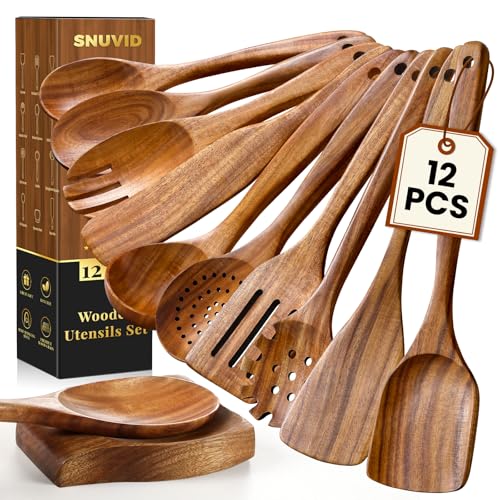
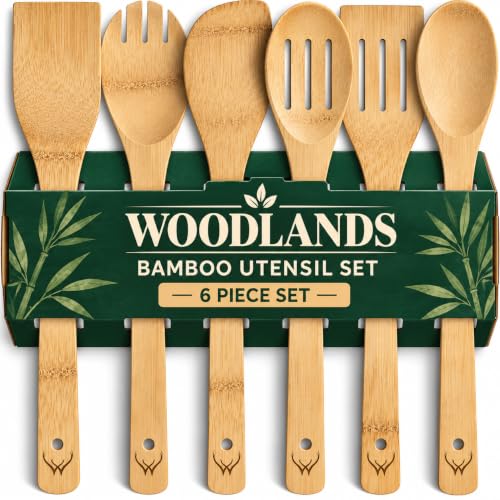
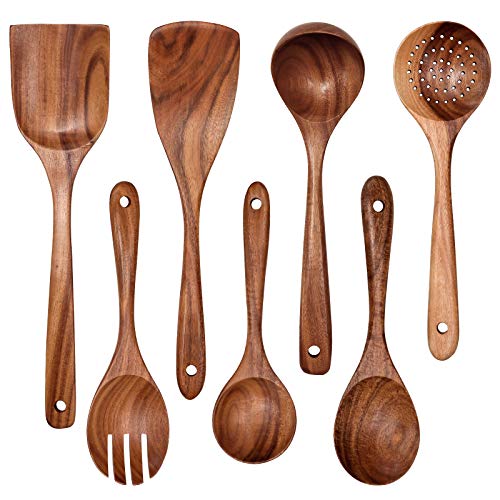

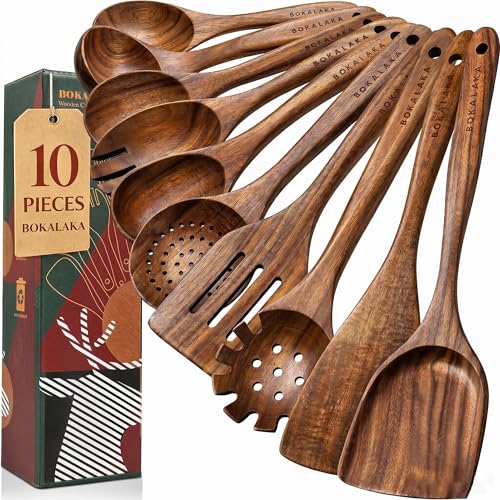

If you are building out your wooden kitchen collection, a good utensil set covers most cooking needs and is easier to maintain consistently than a mismatched collection of different wood types and finishes.
When It Is Time to Replace Your Wooden Utensils
Even well-maintained wooden utensils have a lifespan. Replace yours when you see:
- Deep cracks or splits that cannot be sanded smooth
- A persistent smell that does not go away after cleaning and oiling
- Dark staining in the grain that does not lift with lemon or vinegar treatment
- Rough, raised grain that stays rough even after light sanding and re-oiling
- Any sign of mold or black discoloration deep in the wood fibers
For more on keeping your entire wooden kitchen setup in top shape, read our guide on 7 brilliant ways to clean your wooden kitchen spoons.
Can I put wooden utensils in the oven to sterilize them?
You can, with caution. Use a cold oven, heat to 160-170 degrees Celsius (around 325 degrees F), and limit exposure to 15-20 minutes. The bigger risk is cracking, splitting, or drying out the wood. Safer alternatives like boiling water for 2-5 minutes or a white vinegar wipe-down with a microfiber cloth are less damaging and nearly as effective.
Does boiling wooden utensils sterilize them?
Boiling water (212 degrees F / 100 degrees C) kills most common bacteria and pathogens on contact. A 2-5 minute boil is effective for a one-off deep clean, though repeated boiling will eventually raise the grain and dry out the wood. Always oil the utensil with food-grade mineral oil after boiling and drying.
Is hydrogen peroxide safe to use on wooden spoons?
Yes. A 3% food-grade hydrogen peroxide solution spritzed on the surface and left for a few minutes is safe and effective. It kills bacteria and deodorizes without the wood damage risk of high heat. Rinse with cold water and dry immediately.
How often should I clean wooden utensils?
Wash with warm (not hot) soapy water after every use, rinse, and dry upright or flat immediately. Deep clean with a salt-lemon scrub or vinegar wipe monthly or after contact with raw meat or fish. Re-oil every few months or when the wood looks dry and pale.
Can wooden utensils harbor bacteria?
Wood is actually naturally antimicrobial when properly maintained. Studies have shown that bacteria drawn into wood grain die off over time rather than multiplying, unlike plastic boards which develop crevices that trap bacteria permanently. The key is keeping the wood dry and well-oiled.
This article contains affiliate links #ad
Are Wooden Utensils Machine Washable? The Complete Guide For 2026
Learn How to Sanitize a Wooden Cutting Board Correctly

7 Amazing Benefits of Wooden Kitchen Utensils

Do chefs use wooden utensils? 4 surprising reasons they do

Can you use steel wool on wooden kitchen utensils? 8 surprising truths you must know

Why Is Walnut The Best Wood For Kitchen Utensils?
Loved by our customers

Wooden Utensil Holder
Wood Cutting Boards
Walnut Wooden French Bread Slicer for Baguettes, 1 inch thick slices
Living Room