







Why Wooden Cutting Boards Are Back in Commercial Kitchens

For about two decades, plastic ruled commercial kitchens. Health inspectors preferred it. Chefs used it. And wooden cutting boards got quietly shoved to the back of the cabinet, labeled unsanitary and outdated. Then something shifted. Professional kitchens started bringing wood back, and the research to support that decision followed close behind.
Today, wooden cutting boards appear in Michelin-starred restaurants, farm-to-table bistros, and butcher shops that demand the highest standards of both hygiene and performance. The return is not nostalgia. It is backed by science and practical kitchen experience that plastic or no other material simply cannot replicate.
So what changed? The short answer is that the assumptions about wood being inferior were, in large part, wrong. Here is the full story behind why professional kitchens have welcomed wooden cutting boards back to center stage.
Key takeaway: Peer-reviewed research from UC Davis found that wooden cutting boards are naturally antibacterial. Bacteria drawn into wood grain do not multiply and eventually die off, while bacteria on plastic surfaces can survive and spread if not sanitized completely. Commercial kitchens have taken notice.
Table of Contents
The Science Behind Wood’s Antibacterial Properties
The landmark study that changed the conversation came from Dr. Dean O. Cliver and his team at UC Davis. Their research found that bacteria introduced to a wooden cutting board surface were drawn down into the wood grain within minutes. Once inside, those bacteria did not reproduce. They died. The same bacteria placed on a plastic board stayed on the surface, where they could multiply and cross-contaminate if not scrubbed away completely.
The mechanism behind this is not fully understood, but researchers believe the wood’s natural compounds, including tannins and other antimicrobial substances present in species like maple and walnut, play a role in killing or immobilizing bacteria. The USDA Food Safety and Inspection Service cites this research and confirms that wood is not inherently less safe than plastic for food preparation.
This was a paradigm shift. The assumption had been that you could see and scrub a plastic board back to safety. In practice, knife scarring in plastic creates microscopic grooves where bacteria hide beyond the reach of scrubbing. New plastic is easy to sanitize. Heavily used plastic is not. Wood handles the bacteria problem differently, but it handles it regardless.
Why Plastic Fell Short in Commercial Settings
Plastic boards took over commercial kitchens in the 1980s and 1990s largely due to regulatory guidance that favored nonporous materials. The logic was straightforward: nonporous means nothing can hide, so sanitation should be easier. That logic holds for new plastic. It breaks down fast in a high-volume kitchen.
A commercial kitchen runs a board through thousands of knife strokes per week. Plastic develops deep grooves quickly. Those grooves are nearly impossible to sanitize with standard scrubbing. High-temperature dishwashing can warp thinner boards, creating uneven surfaces where food debris collects. Meanwhile, knife edges dull faster against plastic than against wood. Chefs noticed their knives needed sharpening far more often after switching from wood to plastic boards.
Important note: Plastic boards need to be replaced far more often than wood in commercial environments. Once a plastic board develops deep knife grooves, it should be pulled from service. Many kitchens skip this step, which creates the exact contamination risk plastic was supposed to prevent.
Wood, by contrast, can be resurfaced. A heavily grooved hardwood board can be sanded flat, re-oiled, and returned to service. This extends its useful life significantly and reduces the ongoing cost of board replacement. In a high-margin restaurant world, that kind of practical durability matters.
What Types of Wood Work Best in Pro Kitchens
Not all wood performs equally in a professional kitchen. Commercial operations gravitate toward dense hardwoods that resist knife scarring, absorb minimal moisture, and tolerate the rough handling of daily service. The top choices are maple, walnut, teak, and cherry, with maple being the most common due to its affordability and exceptional hardness.
Hard maple has a Janka hardness rating around 1,450 lbf, which means it resists cutting damage better than softer woods while still being gentle enough on knife edges. According to the USDA Forest Products Laboratory, maple’s tight grain structure also minimizes the surface area where bacteria can establish. This makes it the go-to choice for butcher blocks and cutting boards in volume kitchens.
Walnut is a premium choice used more often in upscale establishments and presentation boards. Its natural oils contribute additional antimicrobial resistance, and its dark, rich appearance works beautifully for charcuterie service and cheese presentations. For a detailed breakdown of wood species for cutting boards, see our guide on the 8 best woods for cutting boards.
- Hard maple: Dense, affordable, knife-friendly, widely used in commercial butcher blocks
- Walnut: Premium, naturally antimicrobial, preferred for presentation boards
- Cherry: Medium hardness, beautiful grain, good durability in lighter-duty applications
- Teak: High natural oil content, excellent moisture resistance, ideal for wet prep areas
NSF and Food Safety Standards for Wooden Boards
NSF International certification has historically been the gold standard for commercial food equipment. For years, NSF did not certify wooden boards, which gave regulators a reason to recommend plastic. That landscape is changing. NSF standards for food equipment now recognize that properly maintained hardwood boards can meet commercial sanitation requirements when handled correctly. The FDA food safety preventive controls framework similarly emphasizes that surface sanitation protocols, not material type alone, determine food contact safety.
The key requirements are straightforward. The board must be made from a closed-grain hardwood (not softwood or bamboo in some interpretations). It must be free of cracks, deep grooves, and structural damage. It must be cleaned after each use with hot soapy water, sanitized with an approved food-safe sanitizer, and dried upright rather than flat. These are not dramatically different from the care requirements for any well-maintained cutting surface.
Local health codes still vary. Some jurisdictions continue to restrict wooden boards in certain commercial applications, particularly raw meat prep. Always verify your local requirements. However, the trend in regulatory guidance has moved toward acknowledging the science, and many previously plastic-only commercial kitchens now permit hardwood boards for bread, produce, and prepared-food prep stations.
How Commercial Kitchens Maintain Wooden Boards
Maintenance is where wooden boards in professional settings differ most from home use. Commercial kitchens operate under strict protocols, and the board maintenance routine reflects that discipline. After each use, boards are scraped clean, washed with hot soapy water, rinsed, and sanitized with a food-safe solution. They are then stood upright to dry rather than laid flat, which prevents warping and allows air circulation on both faces.
Periodically, typically weekly or monthly depending on use volume, boards receive a mineral oil treatment. Food-grade mineral oil penetrates the wood grain and prevents moisture absorption, which extends the board’s life and keeps the surface smooth. The FDA classifies food-grade mineral oil as GRAS (Generally Recognized as Safe) for contact with food surfaces, making it the standard treatment for commercial wooden cutting boards.
Pro kitchen tip: Commercial kitchens often use a board wax made from mineral oil and beeswax for periodic deep conditioning. The wax fills minor surface scratches and builds a protective layer that slows moisture penetration. Apply after oiling, buff lightly, and the board comes back looking nearly new.
When boards develop deep grooves or surface damage, they go to a woodworker for sanding and refinishing rather than the trash. This resurfacing process removes the damaged layer entirely and leaves a fresh cutting surface. Commercial-grade boards are thick enough to survive multiple resurfacing cycles over many years of heavy use.
Top-Rated Wooden Cutting Boards
Bring Professional-Grade Wood Prep to Your Home Kitchen

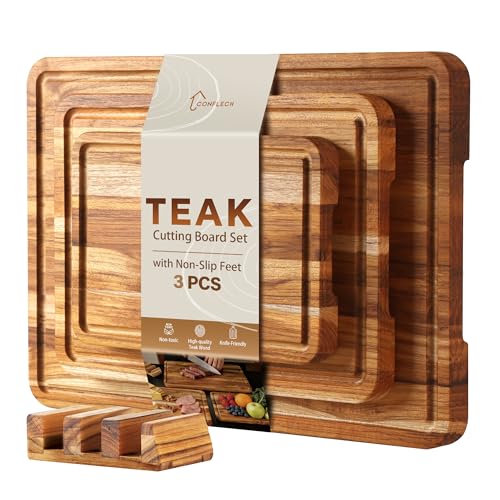


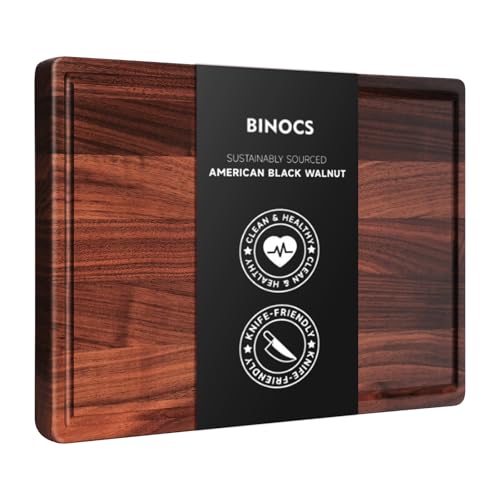
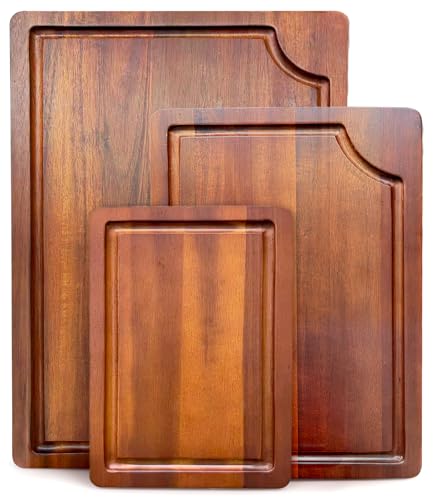


Should Your Home Kitchen Follow Suit?
The answer is yes, with one important caveat: follow the same maintenance discipline that commercial kitchens use. A wooden board that never gets oiled, stays wet, or gets tossed in the dishwasher will crack and harbor bacteria in the same structural damage that makes any board a liability. The advantage of wood is not automatic. It requires intentional care.
For home cooks, the practical recommendation is to keep a hardwood maple or walnut board for vegetable, bread, and cheese prep, and use a separate board for raw proteins. Wash with hot soapy water after each use, let it dry upright, and oil it monthly with food-grade mineral oil. That routine takes about three minutes and keeps a quality board in excellent condition for a decade or more.
For more on choosing the right board for your kitchen, see our comprehensive guide on choosing the best wood cutting board. And if you want to understand why acacia specifically has earned its place in both commercial and home kitchens, read our breakdown of whether acacia wood is good for cutting boards.
The bottom line: Wooden cutting boards returned to commercial kitchens because the science proved they are safe, knives stay sharper longer on wood, and a well-maintained hardwood board outlasts and outperforms plastic in a high-use environment. The same logic applies to your home kitchen.
Are wooden cutting boards allowed in commercial kitchens?
It depends on the local health code and specific application. Many jurisdictions now permit hardwood boards for produce, bread, and cooked-food prep. Raw meat prep is more restricted in some areas. NSF International has moved toward recognizing properly maintained hardwood boards as food-safe. Always verify your local health department requirements.
Why did commercial kitchens switch from plastic to wood boards?
Several factors drove the shift. Research showed that bacteria introduced to wood grain die off rather than multiply, while bacteria in plastic knife grooves can survive scrubbing. Knives also stay sharper longer on wood surfaces. And hardwood boards can be resurfaced and reused for years, while damaged plastic boards must be replaced.
How do restaurants keep wooden cutting boards sanitary?
Commercial kitchens scrape, wash with hot soapy water, sanitize with a food-safe solution, and stand boards upright to dry after each use. Boards receive regular mineral oil treatments to prevent cracking. Heavily grooved boards are either resurfaced by a woodworker or retired from service.
What wood is best for commercial cutting boards?
Hard maple is the most widely used wood in commercial kitchens due to its high Janka hardness rating, tight grain structure, and affordability. Walnut is used in premium settings for its natural antimicrobial oils and visual appeal. Teak works well in wet prep areas due to its high natural oil content.
This article contains affiliate links #ad





Loved by our customers


Wooden Utensil Holder


Wood Cutting Boards
Walnut Wooden French Bread Slicer for Baguettes, 1 inch thick slices

Living Room