







Does Wooden Furniture Absorb Water? Everything You Need To Know
Wooden furniture has been cherished for centuries for its timeless beauty, strength, and versatility. From rustic farmhouse tables to sleek modern cabinets, wood fits seamlessly into almost any style of home decoration. Yet, one concern often lingers in the minds of homeowners: how does wood interact with water? If you have ever noticed rings left behind by a glass, a warped tabletop, or a sticky drawer after a humid summer, you have already seen the effects of water on wood.
Table of Contents
The Science of Wood and Water (And Why It Matters for Your Furniture)
Wood is hygroscopic, meaning it constantly exchanges moisture with the air around it. The USDA Forest Products Laboratory Wood Handbook defines wood’s equilibrium moisture content (EMC) as the moisture level wood reaches when in balance with its environment. Indoor furniture typically equilibrates between 6 and 9 percent moisture content. Drop a glass of water on a finished oak tabletop and that local moisture content can spike to 30 percent in the surface layer within minutes, while the wood underneath stays dry. That moisture differential is the engine behind every type of water damage from cup rings to warped tabletops.
The good news is that the same physics that lets wood absorb water also lets it release water under the right conditions. Most cosmetic water damage on solid wood is reversible if caught quickly. Structural damage, where joints separate or boards split, is permanent. Knowing the difference between the two and acting fast is what separates furniture that lasts a generation from furniture that ends up in a landfill in five years. The sections below break down exactly what happens when wood meets water and what you can do about it.
Does Wooden Furniture Absorb Water?
The short answer is yes, wooden furniture does absorb water. Wood is an organic, porous material. Its structure is made up of countless tiny capillaries, much like a sponge. These capillaries naturally draw in and store moisture from the surrounding environment.
However, the extent to which wood absorbs water depends on several factors.
Type of Wood:
Hardwoods like oak, maple, and teak are generally denser and less porous than softwoods such as pine, fir, or cedar. This makes hardwoods more resistant to water damage, though not immune.
Finish or Treatment:
Raw, unfinished wood will quickly soak up water. A protective finish, such as varnish, polyurethane, lacquer, or even natural oils and waxes, creates a barrier that slows down moisture penetration.
Duration of Exposure:
A brief spill wiped up quickly usually will not cause lasting damage. But prolonged contact, such as leaving a wet plant pot on a wooden table, can lead to swelling, stains, or mold.
Environmental Conditions:
Humidity plays a significant role. In dry conditions, wood can lose moisture and shrink. In damp conditions, it absorbs moisture and swells.
So while it is true that wood does absorb water, how much and how severely it affects your furniture depends on these variables.
The rate at which wood absorbs water depends heavily on which direction the water is hitting. End grain (the cut ends of the wood fibers, like the ends of a tabletop board) absorbs water 10 to 12 times faster than face grain or edge grain. This is why dining table ends, cutting board edges, and any exposed end grain need extra finish coats. The same principle explains why an end grain butcher block needs more frequent oiling than an edge grain one even though it self-heals knife marks better. Hardness is a poor predictor of water resistance: bamboo (technically a grass) and teak (medium-hard) outperform much harder maple in water-contact tests because of natural oils and silica content rather than density.
What Happens When Wooden Furniture Absorbs Water?
Water absorption in wood is not just a surface-level issue. It can alter the structure and appearance of the furniture in several ways.
Swelling and Warping:
When wood cells absorb water, they expand. If the expansion happens unevenly, such as one side of a tabletop drying faster than the other, the wood can warp, twist, or bow out of shape. This is one of the most visible and frustrating effects of water absorption.
Cracking and Splitting:
On the opposite side, when water evaporates too quickly, the wood contracts. Rapid cycles of swelling and shrinking put stress on the fibers, leading to cracks, splits, or small gaps between joints.
Discolouration and Staining:
Moisture that seeps beneath the finish often leaves behind unsightly marks. White rings usually indicate that moisture is trapped in the finish, while darker stains often mean water has penetrated deep into the wood.
Mold and Mildew Growth:
Damp wood is an ideal environment for mold and mildew. Not only can this cause unpleasant odors, but it also weakens the wood and poses health risks in your home.
Weakening of Joints and Glue:
Most wooden furniture relies on adhesives and precise joinery to hold its structure. Excessive moisture can soften glue and cause joints to loosen, making the piece unstable.
The visible warning signs progress in a predictable order. White rings or hazy spots appear first; these mean moisture is trapped in the finish layer only and can usually be removed with mayonnaise, petroleum jelly, or a clothes iron set on low through a thin towel. Dark stains come next; those mean water has reached the wood itself and may need light sanding or oxalic acid treatment to fully clear. The most serious sign is raised grain or “fuzziness” where wood fibers have lifted; this indicates the surface cells are full saturated and structural changes are happening below. At this point the piece needs professional refinishing or you accept the patina as part of the furniture’s story.
How to Protect Wooden Furniture from Water
Thankfully, there are many ways to safeguard your furniture from the effects of water. With proper care, you can enjoy your wooden pieces for decades without significant damage.
Apply a Protective Finish:
The best defense against water absorption is a good finish. Varnishes, sealants, polyurethane coatings, and natural waxes all act as barriers. Be sure to reapply finishes as they wear down over time. For outdoor furniture, consider weather-resistant options like spar urethane or marine varnish.
Wipe Spills Immediately:
Never allow water to sit on wooden surfaces. Keep a soft, dry cloth handy, and wipe up spills as soon as they occur.
Use Coasters, Mats, and Tablecloths:
Preventative measures go a long way. Place coasters under glasses, mats under hot dishes, and tablecloths for added protection. For potted plants, always use trays to catch excess water.
Maintain Stable Humidity Levels:
Wood naturally expands and contracts with humidity. Ideally, indoor humidity should stay between 40 and 50 percent. A humidifier in winter and a dehumidifier in summer can help keep levels balanced.
Avoid Direct Exposure to Water and Sunlight:
Keep furniture away from leaky windows, bathrooms, or damp basements. Direct sunlight can also dry out wood too quickly, leading to cracks and fading.
Regular Cleaning and Conditioning:
Use a gentle wood cleaner and occasionally apply furniture polish or conditioner to nourish the wood and keep it looking vibrant.
Different finishes deliver different levels of water resistance. Polyurethane (oil-based or water-based) creates a thick, plasticky barrier that handles spills and standing water for hours; this is what most factory furniture uses. Tung oil and Danish oil penetrate the wood rather than coating it, giving a more natural feel but requiring annual reapplication and quick spill cleanup. Pure beeswax is the gentlest finish and offers minimal water protection; it is best for display pieces, not dining tables. For maximum protection without the plastic look, multiple coats of marine-grade spar varnish (the same stuff used on boat decks) holds up to years of moisture. The right finish depends on how the piece will actually be used: a coffee table needs more protection than a bedroom nightstand.
First Aid for Water-Damaged Wooden Furniture
Speed matters more than skill when water hits wood. The first 30 minutes determine whether the damage is cosmetic or structural. Step one: blot, do not wipe. A wet cloth pushed across a wet surface drives water into the grain. Press a folded dry towel down firmly to absorb standing water, then lift it straight up. Step two: dry the area with a fan on low for two to three hours. Do not use a hair dryer on hot; rapid heating can crack the finish and trap moisture beneath. Step three: assess. If a white ring remains after 24 hours, treat it that day with the mayonnaise-or-iron method below.
For white rings, the mayonnaise method works on most finishes: spread a tablespoon over the ring, leave overnight, wipe clean. The oil in the mayo displaces the trapped moisture. The iron method (low setting, dry iron, through a clean cotton towel, 10-second passes only) drives moisture out via gentle heat. For dark water stains, light sanding with 320 grit followed by a matching wood stain and finish coat is the DIY approach; deeper stains need professional refinishing. The single most important habit for long-term protection is using coasters religiously and keeping indoor humidity between 40 and 55 percent year-round; a $25 hygrometer pays for itself in saved furniture within one season.
Learn how to properly dry wood for all your woodworking projects in this article.
Conclusion
So, does wooden furniture absorb water? The answer is a definite yes. Wood is a porous, living material that naturally interacts with moisture in its environment. Left unprotected, water can cause swelling, cracking, discoloration, mold growth, and even structural weakening.
The good news is that with preventive care, such as applying protective finishes, using coasters, wiping spills promptly, and controlling humidity, you can keep water damage at bay. Wooden furniture is an investment in beauty and durability, and with the right precautions, it can last for generations.
By understanding the relationship between wood and water, you are better equipped to preserve the elegance and strength of your wooden pieces for years to come.
Related: Read more on this article for uncovering why wood remains a top choice for construction despite moisture considerations.
Frequently Asked Questions
How long can wooden furniture sit in water before damage is permanent?
Most finished hardwood pieces tolerate surface water for 30 to 60 minutes without lasting damage. Past that window, water seeps through finish weak points and reaches the wood. Unfinished or oil-finished wood has roughly 10 minutes before the same level of penetration. After 6 to 8 hours of contact, structural changes (warping, joint failure) become very likely and reversal usually requires professional refinishing.
Does sealing wood with polyurethane make it waterproof?
Water-resistant, not waterproof. Polyurethane stops water from soaking in for the duration of a spill, but standing water for hours can still find weak spots in the finish (especially at corners and edges). Multiple coats (3 to 4) over fully sanded wood comes closest to truly waterproof, and marine-grade spar varnish exceeds standard polyurethane for outdoor or wet-area use.
Can I save warped wooden furniture?
Sometimes. Light warping caused by recent moisture exposure often reverses itself if you place the piece in a stable 40 to 50 percent humidity environment for 4 to 6 weeks. Weight (heavy books on the warped surface) can speed recovery. Severe warping with cracked joinery is permanent; the piece can be cosmetically restored but the structure is compromised and weight-bearing pieces should not be trusted.
How do I tell hardwood from softwood for water resistance?
Hardwood comes from deciduous (leaf-shedding) trees like oak, maple, walnut, cherry. Softwood comes from coniferous (cone-bearing) trees like pine, fir, cedar. The hardwood-versus-softwood naming refers to species, not actual hardness. For water resistance, look up the specific species: white oak (hardwood) is highly water resistant, balsa (also hardwood) is not, while cedar (softwood) outperforms many hardwoods in outdoor settings due to natural oils. Species matters more than the hardwood/softwood label.
What humidity level is safest for wooden furniture?
Between 40 and 55 percent relative humidity is the safe zone year-round. Below 35 percent, wood loses moisture, contracts, and risks cracking. Above 65 percent, wood absorbs moisture, swells, and risks warping and mold. A simple $25 digital hygrometer gives you the reading. In dry winter air, a humidifier helps; in humid summer or basement areas, a dehumidifier is the answer. Stable humidity matters more than hitting an exact number.
Loved by our customers
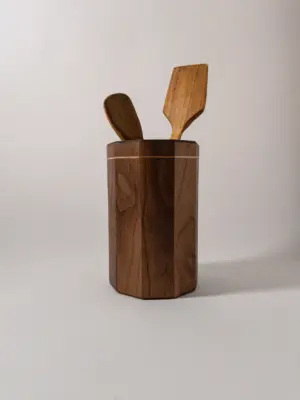
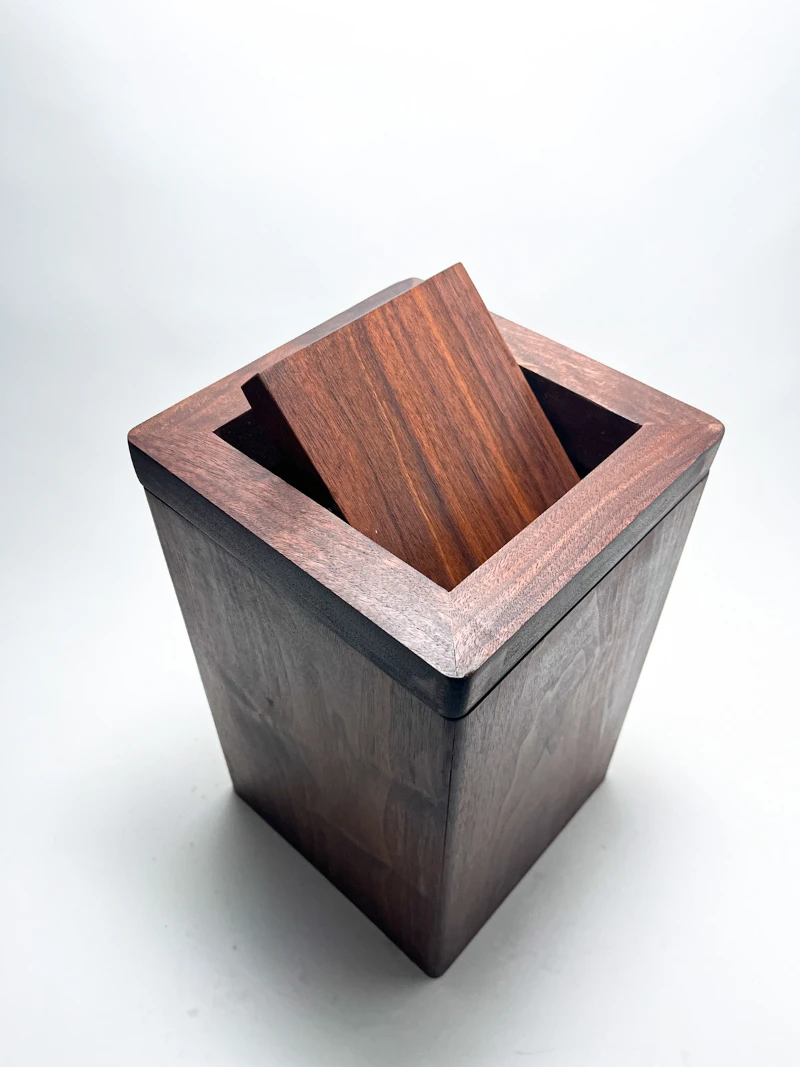
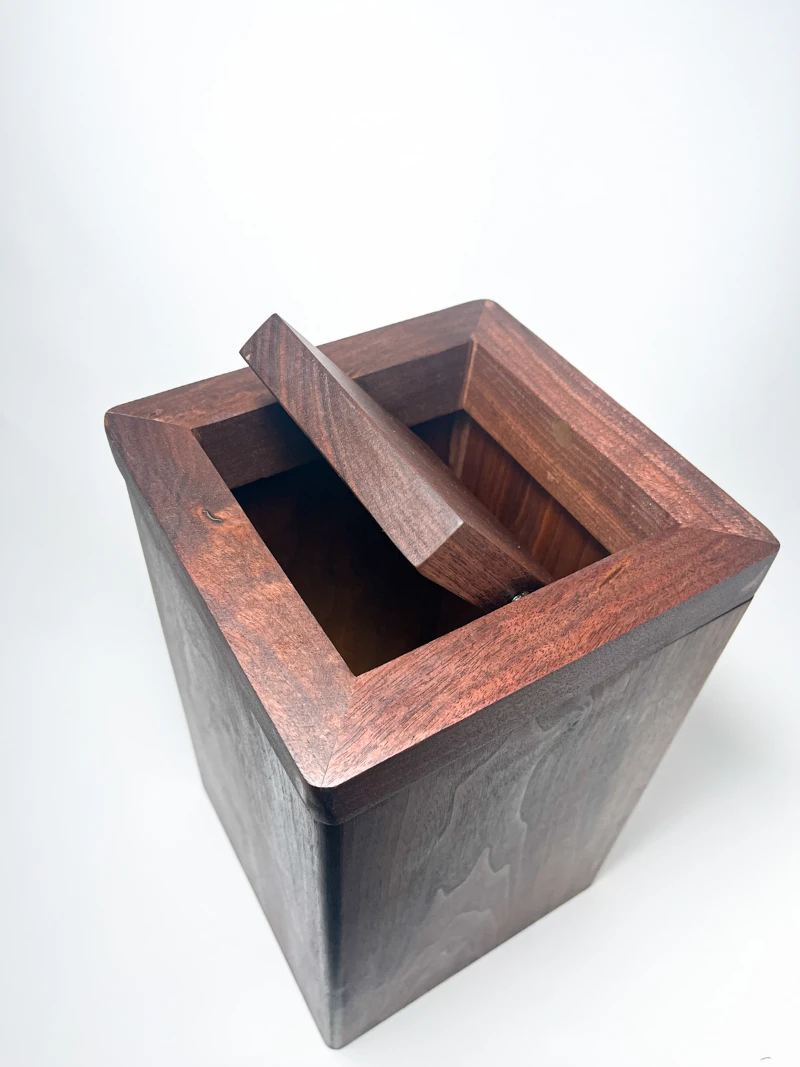
Wooden Utensil Holder
You Save: $10.00 (13%)
Original price was: $80.00.$70.00Current price is: $70.00. excl. tax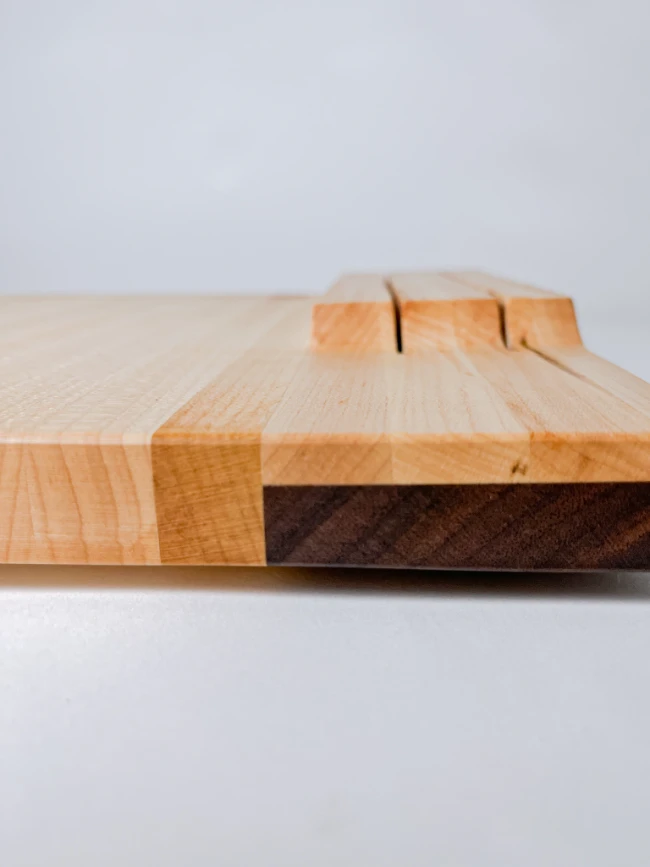
You Save: $15.00 – $30.00
Price range: $145.00 through $265.00 excl. tax
Wood Cutting Boards
Walnut Wooden French Bread Slicer for Baguettes, 1 inch thick slices
Living Room
You Save: $15.00 (20%)
Original price was: $75.00.$60.00Current price is: $60.00. excl. tax