







Why America Builds with Wood: Homes, Farmhouses & Tradition
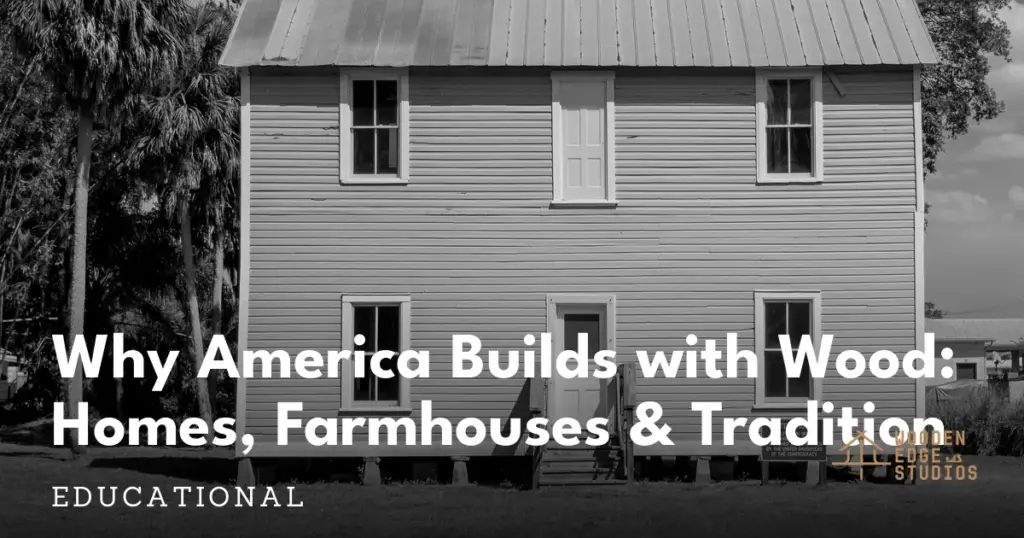
If you have ever shown a photograph of an American neighborhood to someone from Germany, Japan, or Brazil, the first question is almost always the same: “Why are all the houses made of wood?” It is a reasonable question. Wood burns. Wood rots. Wood lets in drafts. And yet over 90 percent of homes built in the United States use wood-frame construction.
The answer is not stubbornness or ignorance. It is history, geography, economics, and a deeply embedded building culture that goes back to the first European settlers who stepped off a boat and looked at an apparently endless continent of trees.
This post digs into why America became a wood-building nation, why the farmhouse silhouette became our residential default, and why that tradition is not going anywhere despite the occasional headline about concrete houses surviving California wildfires.
The short answer: America built with wood because the continent had wood everywhere and skilled masons were in short supply. Over three centuries that practical choice became a complete industrial and cultural ecosystem. Changing it would require retraining a workforce, rewriting building codes, and convincing homeowners that a concrete ranch house is just as charming as a farmhouse with a wraparound porch. Good luck with that.
Table of Contents
The Forest Was There First
When European settlers arrived in North America in the 1600s, roughly half the continent, more than one billion acres, was forested. The Pacific Northwest had Douglas fir and western red cedar. The South had longleaf pine. New England had white pine and oak. The upper Midwest had great stands of eastern white pine that would fuel the construction of entire cities.
Compare that to Europe, where centuries of dense habitation had already stripped most old-growth forests. European builders had long since turned to stone, brick, and masonry out of necessity. Americans did not have that constraint. What they had was timber and a need to build fast.
Speed mattered enormously. A new settler family needed shelter before winter. A growing frontier town needed homes, barns, and churches within weeks, not months. Wood could be felled, rough-cut, and raised into a framed structure faster than any masonry alternative. It required fewer specialized skills, lighter equipment, and less capital. It won on every practical axis.
By the numbers: The U.S. and Canada together hold about 15 percent of the world’s remaining forest cover. That geographic reality underpins the entire American building tradition and keeps timber comparatively affordable even today.
Balloon Framing Changed Everything
Early American construction used heavy timber post-and-beam framing, the same joinery-intensive method used in Europe. Each connection was mortised and tenoned, requiring skilled carpenters who were expensive and scarce in a rapidly growing country.
In the 1830s, a new method emerged in Chicago called balloon framing. Instead of heavy timbers connected by joinery, balloon framing used light, dimensionally consistent 2-inch boards (made possible by industrial sawmills) held together with mass-produced wire nails. Suddenly you did not need a master carpenter to raise a house. You needed a handful of workers who could follow a plan and swing a hammer.
Critics called it balloon framing sarcastically, assuming structures so light would blow away. They did not. Platform framing (a refinement of balloon framing that became standard in the 20th century) is what virtually every American home is built on today. The industry that grew around this method, dimensioned lumber, standardized stud spacing, prefabricated trusses, engineered sheathing, became one of the largest manufacturing sectors in the country.
The USDA Forest Products Laboratory has documented wood-frame construction for over a century and continues to develop improvements in engineered wood products that extend the tradition into high-rise and commercial construction.
Why Wood Still Wins on Cost and Speed
In modern residential construction, wood-frame continues to outperform alternatives on two metrics that drive almost every homebuilding decision: cost per square foot and time to completion.
- Cost: A wood-frame house typically costs 10-30% less to build than a comparable concrete or masonry structure.
- Speed: A production wood-frame house can be framed in days. Concrete requires formwork, pouring, curing time, and then stripping forms before any next stage begins.
- Flexibility: Need to move a wall? In a wood-frame house, that is an afternoon job. In a concrete structure, it is a structural engineering project.
- Repairability: Damaged wood members are relatively easy and cheap to sister or replace. Damaged concrete structural elements are significantly more complex.
- Insulation: Wood studs create natural cavities for insulation in a way that solid masonry walls do not, making wood-frame homes easier to insulate to modern energy codes.
For a deeper look at all the ways wood outperforms alternatives in both construction and everyday use, our post on the many benefits of using wood in construction covers the full picture.
The Farmhouse Connection
No conversation about why America builds with wood is complete without talking about the farmhouse. The classic American farmhouse is not just a style; it is the direct architectural descendant of practical necessity.
Early American farm families needed large, functional structures built quickly with local materials. The result was a vernacular architecture defined by simple gabled roofs, generous porches to shelter work and socialization, board-and-batten or clapboard wood siding, and wide-open interior plans that could flex between sleeping, cooking, and working as the seasons demanded.
The farmhouse was built to be modified. A new wing could be added as the family grew. A covered breezeway could connect the house to a new barn. The whole structure could be disassembled, moved, and rebuilt if the family relocated. This adaptability is so deeply embedded in American residential culture that it persists today in the form of the modern farmhouse aesthetic, a style that dominates new home construction and interior design despite being miles from any actual agricultural operation.
Why the farmhouse aesthetic endures: It is not nostalgia alone. The clean lines, natural wood tones, functional layouts, and connection to craft that define farmhouse design align with exactly what today’s homeowners say they want: authenticity, durability, and a space that feels made by hand rather than manufactured. That is why wood, the material that makes farmhouse design possible, remains the first choice.
Wood and Seismic Flexibility
One of the most common arguments against wood construction is that it is vulnerable to fire and wind. That is partly true. But wood has an often-overlooked structural advantage: seismic flexibility.
Wood-frame structures flex and dissipate seismic energy in ways that rigid masonry structures cannot. When an earthquake hits, a properly engineered wood-frame house bends; an unreinforced brick or concrete house shatters. The 1906 San Francisco earthquake is frequently cited as proof that wood burns, but the more accurate lesson is that most of the deaths and structural failures came from unreinforced masonry, not wood framing. The fires that followed were the greater disaster.
Modern seismic engineering has made wood-frame construction even more resilient. Cross-laminated timber (CLT) and other engineered wood products can now be used in mid-rise buildings with excellent seismic performance. Japan, which has the most sophisticated earthquake-resistant building culture in the world, has a centuries-old tradition of refined wood construction for precisely this reason.
The Wood Database provides detailed species-level data on structural properties that engineers use when specifying wood for construction applications.
Wood as a Sustainable Building Material
The sustainability conversation around wood construction is more nuanced than headlines suggest. Concrete production accounts for roughly 8 percent of global CO2 emissions. Steel is similarly carbon-intensive. Wood, by contrast, is the only major building material that is renewable: trees grow back.
Sustainably managed forests can act as carbon sinks, storing more carbon in growing trees and harvested wood products than is released during logging and processing. The USDA Forest Products Laboratory has published extensive research on wood’s carbon lifecycle, consistently showing a favorable comparison to concrete and steel alternatives.
Certification programs like the Forest Stewardship Council (FSC) and the Sustainable Forestry Initiative (SFI) give builders and consumers tools to verify that the lumber they buy comes from responsibly managed sources. When you choose a wood-frame home built with certified lumber, you are making a choice that the material will regenerate.
Modern wood innovation: Cross-laminated timber (CLT) and mass timber construction are extending wood’s range into multi-story commercial buildings. Structures once unthinkable in wood are now being built, cutting embodied carbon while maintaining structural performance. The future of sustainable construction is, in many ways, a very old material used in new ways.
The Cultural Lock-In: Why We Are Not Switching Anytime Soon
Beyond economics and engineering, there is a cultural dimension to American wood construction that is genuinely difficult to overstate. More than 90 percent of homes are wood-framed. That means there is an entire ecosystem built around it: sawmills, lumber yards, framing contractors, window and door manufacturers making products sized for 2×4 and 2×6 stud walls, building inspectors trained on wood-frame construction, building codes written around it, insurance models calibrated to it.
Changing the default building material for American residential construction would require simultaneously rewriting those codes, retraining that workforce, retooling those supply chains, and convincing the 73 percent of Americans who say they prefer a single-family detached home that the concrete alternative is just as appealing. Cultural inertia is real, and in this case it is backed by a substantial economic infrastructure.
This is not a criticism. The system works. American homes are built quickly, at accessible price points, and with a level of customizability that other construction methods struggle to match. The wood tradition, from the original settler cabins to the craftsman bungalows of the early 20th century to today’s modern farmhouses, is a continuous thread of practical, beautiful building. For a look at how that tradition intersects with everyday wood products in your home, see our post on 7 surprising reasons to use wood every day at home.
What This Means for Homeowners and DIYers
If you live in a wood-frame home, and statistically you almost certainly do, understanding its material reality changes how you maintain and improve it. Wood breathes. It moves seasonally with humidity. It wants to be kept dry, well-ventilated, and periodically refinished or sealed.
The flip side is that a wood-frame home is genuinely customizable in ways that masonry construction is not. You can frame a new wall in a weekend. You can open up a ceiling to expose the joists. You can add a room, modify a window opening, or rebuild a porch without a structural engineer involved in every decision.
That connection to the material is also why so many homeowners find woodworking so satisfying. When you build a piece of furniture or a set of shelves for a wood-frame home, you are continuing the same material tradition that shaped the house around you. To explore the craft side of that tradition, check out our guide to the 10 tools you need for basic woodworking.
America builds with wood because wood was there first, built the country fastest, costs the least, adapts the best, and became the backbone of an entire cultural and industrial ecosystem. That is not a mistake. That is how civilizations build things.
Why do Americans build houses out of wood instead of brick or concrete?
Wood was abundant and cheap when the country was expanding rapidly in the 18th and 19th centuries. It is faster to build with, easier to modify, and lighter than masonry. Over time, an entire industry and building code ecosystem formed around wood-frame construction, making it the deeply entrenched default for residential homes.
What percentage of American homes are built with wood?
According to the Western Wood Products Association, over 90 percent of U.S. homes are built using wood-frame construction. This has been consistent for well over a century and remains true today despite the availability of steel and concrete alternatives.
Is wood framing safe in earthquakes and hurricanes?
Wood-frame construction is actually well-suited to low-to-moderate seismic activity because it flexes rather than shatters. Properly engineered wood-frame homes can be highly resilient. In hurricane zones, modern building codes require hurricane straps and shear panels that dramatically improve wood frame performance. No material is perfect for every disaster, but wood handles a wide range of hazards better than its reputation suggests.
Is the American farmhouse style connected to wood construction?
Absolutely. The classic American farmhouse evolved from practical necessity: wood was what settlers had on hand, and post-and-beam or balloon-frame construction allowed large farmhouses to go up quickly with minimal skilled labor. That vernacular aesthetic of wide porches, board-and-batten siding, and natural wood interiors has become an enduring design identity in American homes.
Is wood a sustainable building material?
Yes, when sourced responsibly. Wood is the only major building material that is renewable. Sustainably managed forests can sequester carbon and regenerate. Concrete and steel production are among the most carbon-intensive industrial processes on earth. Certified lumber (FSC, SFI) and engineered wood products like CLT (cross-laminated timber) are making wood an even more compelling choice for green construction.
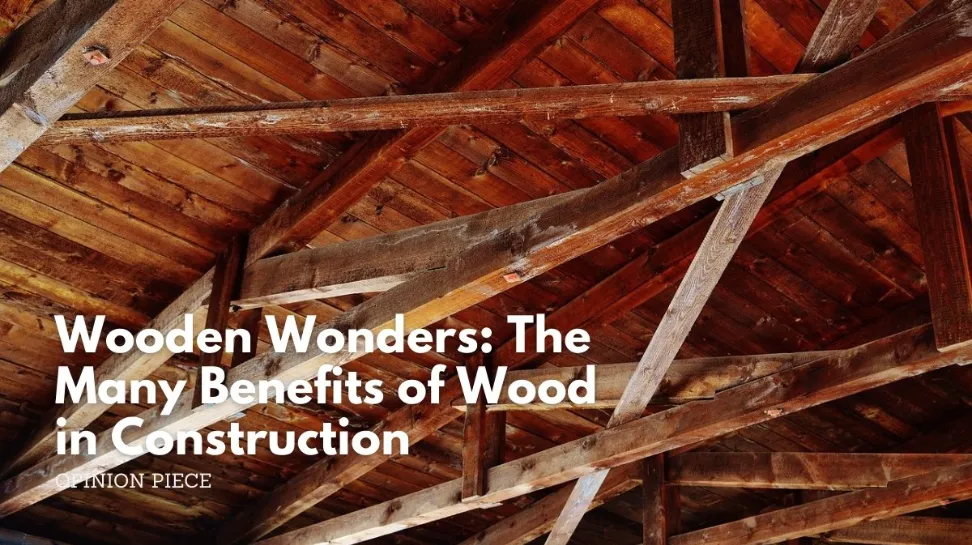
Wooden Wonders: The Many Benefits of Wood in Construction

7 Surprising Reasons To Use Wood Every Day At Home

Most Expensive Woods: World’s Rarest And Why They Are Worth A Fortune
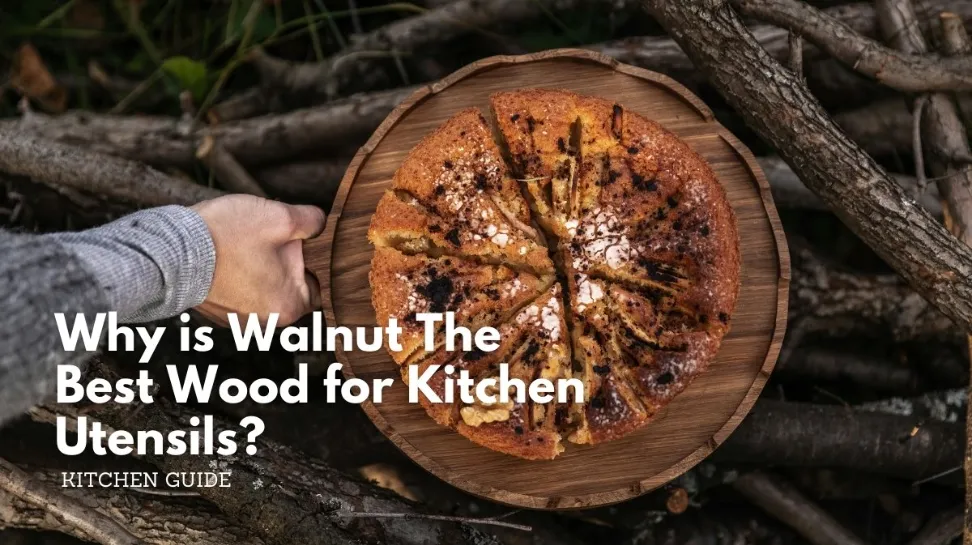
Why Is Walnut The Best Wood For Kitchen Utensils?
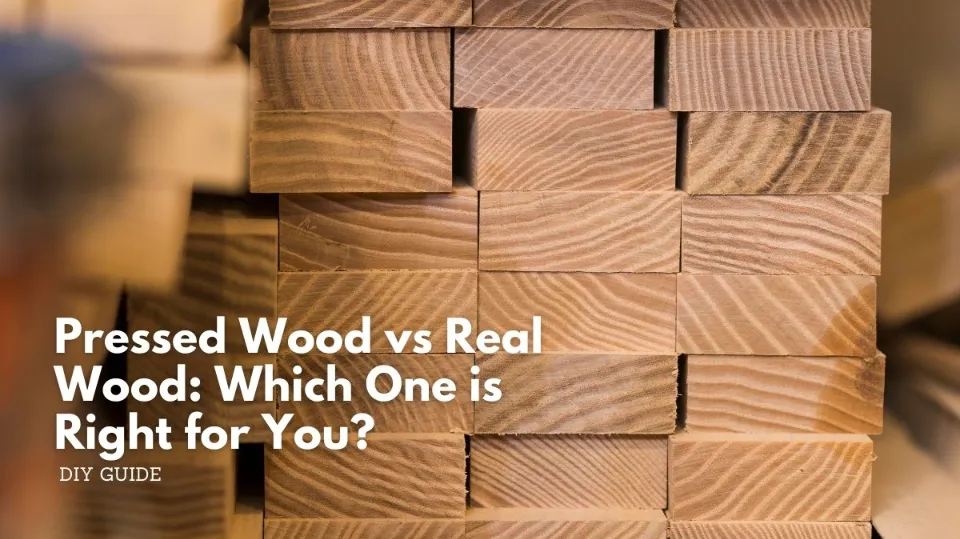
Pressed Wood Vs Real Wood: Which One is Right for You?

Sustainable Woodworking Hacks You Need To Try
Loved by our customers


Wooden Utensil Holder

Wood Cutting Boards
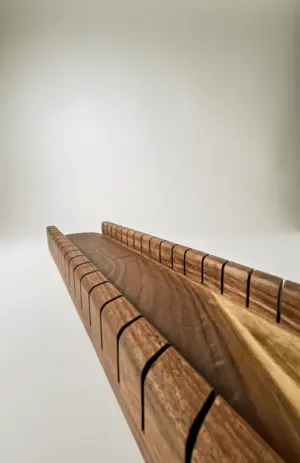
Walnut Wooden French Bread Slicer for Baguettes, 1 inch thick slices





Living Room